Managing Execution Limits, Tool Scoping, and Delegated Authority in Multi-Agent Workflows Agentic AI systems—agents capable of planning, reasoning, and taking action with minimal human supervision—are moving from research labs into production environments. Unlike traditional AI models that generate text or images on demand, these agents interact with tools, execute commands, access databases, and modify digital assets. When multiple agents operate within the same environment, the governance challenge intensifies significantly. The principle of least-privilege access, a cornerstone of information security for decades, has never been more relevant—or more difficult to implement. In multi-agent systems, determining which agents should access which tools, under what conditions, and with what level of authority requires a fundamental rethinking of access control architectures. Related: If your workflow touches verification, provenance, or suspicious media, Synthetic...

How to Set Runtime Boundaries for Agentic AI
As organizations move beyond single-agent AI implementations toward multi-agent systems, they're encountering a governance challenge that existing frameworks weren't designed to address. When multiple AI agents operate autonomously—coordinating tasks, making interdependent decisions, and adapting to one another's behavior—the traditional model of monitoring individual model outputs becomes insufficient.
The complexity isn't just multiplicative. It's emergent. Multi-agent systems exhibit behaviors that can't be predicted by examining each agent in isolation. They develop interaction patterns, resource allocation strategies, and collective decision-making processes that surface only during execution. For organizations deploying these systems in production environments, this creates a fundamental governance question: how do you maintain accountability, ensure alignment with organizational objectives, and prevent unintended consequences when the system's behavior emerges from dynamic agent interactions rather than deterministic logic?
Related: If your workflow touches verification, provenance, or suspicious media, Synthetic Proof can help audit content and reduce trust risk.
This isn't a theoretical concern. Multi-agent systems are already coordinating customer service workflows, managing supply chain optimization, conducting financial analysis, and orchestrating marketing campaigns. As these deployments scale, the absence of robust governance frameworks is becoming operationally untenable.
The Limits of Single-Agent Governance Models
Traditional AI governance approaches were built around discrete model deployments. Organizations establish guardrails, monitor inputs and outputs, conduct periodic reviews, and maintain audit trails for individual systems. These practices work reasonably well when you're governing a single large language model answering customer questions or a vision model classifying images.
Multi-agent systems break this model in several ways. First, the decision-making authority is distributed. No single agent determines the outcome—instead, results emerge from negotiations, delegations, and coordinated actions across multiple autonomous components. Second, the interaction topology changes dynamically. Agents may communicate directly, form temporary coalitions, or reorganize their collaboration patterns based on task requirements. Third, the system's knowledge state is distributed and constantly evolving as agents share information, update their understanding, and adapt their behavior.
Attempting to apply single-agent governance to these environments produces either false confidence or operational paralysis. If you only monitor individual agent outputs, you miss the emergent system-level behaviors that create the most significant risks. If you try to audit every inter-agent interaction, you generate more compliance data than any organization can meaningfully review.
Emergent Behavior and Accountability Gaps
The governance challenge intensifies when multi-agent systems produce outcomes that no individual agent explicitly chose. Consider a scenario where three agents collaborate on financial trading decisions: one analyzes market data, another assesses risk tolerance, and a third executes trades. If the system generates unexpected losses, determining accountability requires understanding not just what each agent did, but how their interactions produced the collective decision.
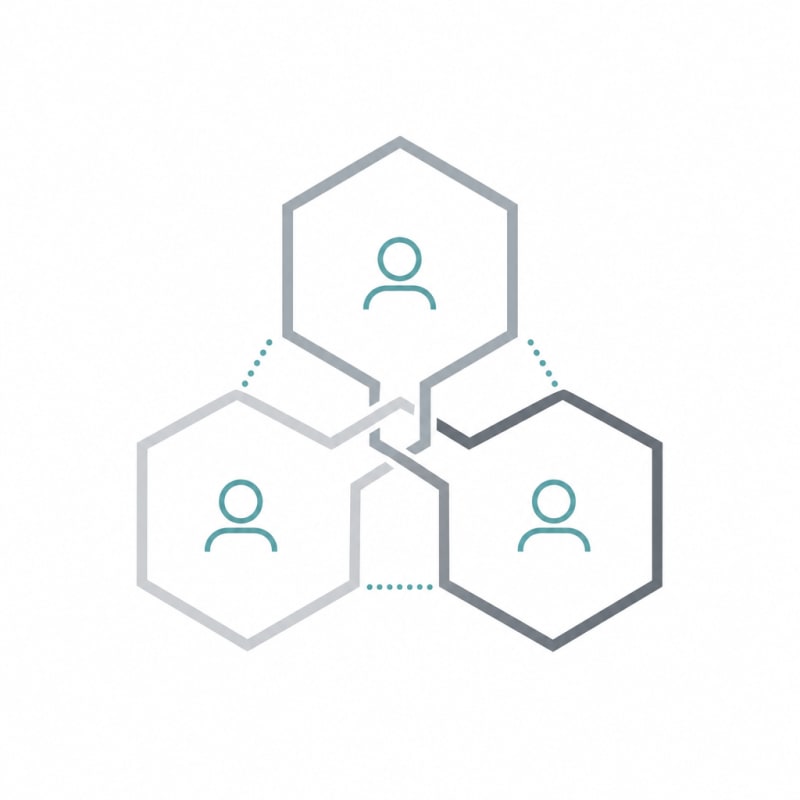
This isn't simply a technical debugging problem. It's a governance and legal question. Organizations need to establish who is responsible when emergent agent behavior violates policy, causes customer harm, or breaches regulatory requirements. The answer can't be "the system decided." Effective governance requires tracing emergent outcomes back to specific design choices, configuration decisions, and organizational policies.
Scoping the Governance Perimeter
Governing multi-agent systems begins with defining what you're actually governing. Unlike monolithic applications with clear boundaries, agent swarms often have permeable perimeters. Agents may invoke external services, delegate tasks to specialized sub-agents, or recruit additional capabilities on demand. The system's functional scope can expand and contract during execution.
Organizations need to establish governance boundaries that account for this fluidity while maintaining practical oversight. This typically involves several distinct layers:
Agent identity and authorization: Every agent operating within the system should have a verifiable identity and explicit authorization scope. This isn't just about authentication—it's about establishing which agents can perform which actions, access which resources, and delegate which authorities to other agents. Without this foundation, you can't reliably attribute actions to specific system components.
Communication protocols and interaction policies: Agents need governed channels for coordination. This includes defining which agents can communicate directly, what information they can share, and how conflicts between agents should be resolved. Organizations should treat inter-agent communication with the same governance rigor they apply to external API calls or data transfers.
Resource access and consumption limits: Multi-agent systems can consume computational resources, make external API calls, access databases, and incur costs at rates that scale with agent count and interaction frequency. Governance frameworks need to establish consumption budgets, rate limits, and resource allocation policies that prevent runaway utilization.
Collective decision thresholds: For decisions that carry organizational risk—financial transactions, customer commitments, data access, or policy changes—governance should define when individual agents can act autonomously versus when collective agreement or human approval is required.
Observability Across Agent Interactions
Effective governance requires visibility into how agents are actually collaborating, not just what they're individually producing. This means capturing interaction patterns, decision flows, and coordination mechanisms as first-class observability data.
Organizations need the ability to reconstruct how a collective outcome was reached. Which agents participated in the decision? What information did they exchange? How did they resolve conflicting recommendations? What external data influenced their coordination? These questions can't be answered by monitoring individual agent logs in isolation—they require system-level observability that tracks interactions as structured, queryable events.
The challenge is capturing this information without creating performance bottlenecks or generating unusable data volumes. Not every inter-agent message needs permanent retention, but critical decision points, policy violations, and unexpected interaction patterns should be captured with sufficient context for meaningful review.
Temporal and Causal Traceability
Multi-agent systems operate across time. An agent's current behavior may be influenced by interactions that occurred minutes, hours, or days earlier. Governance frameworks need temporal traceability that connects current system states to historical events and decisions.
This becomes particularly important when investigating incidents or auditing compliance. If an agent swarm produces a problematic outcome, reviewers need to trace the causal chain backward—identifying which agent interactions contributed to the decision, what information was available at each step, and where the system's behavior diverged from expected patterns.
Building this capability requires more than comprehensive logging. It requires structured event capture that preserves causal relationships, agent decision rationale, and the temporal sequence of interactions. Organizations are increasingly recognizing that this level of traceability isn't optional—it's foundational to maintaining accountability in autonomous multi-agent environments.
Policy Enforcement in Distributed Decisions
Organizational policies that were straightforward to enforce in single-agent systems become significantly more complex when decision authority is distributed across multiple autonomous components. How do you ensure regulatory compliance when no single agent makes the final call? How do you prevent policy violations that emerge from the combination of individually acceptable agent actions?
Effective governance requires embedding policy enforcement throughout the multi-agent system architecture. This includes:
Pre-deployment policy validation: Before agent swarms operate in production, their interaction patterns, decision authorities, and collective behaviors should be tested against organizational policies. This isn't about predicting every possible scenario—it's about identifying known risk patterns and ensuring appropriate guardrails exist.
Runtime policy monitoring: Active enforcement mechanisms that detect when agent interactions are approaching policy boundaries or producing concerning patterns. This includes monitoring for resource over-consumption, unauthorized data access, unexpected agent coalitions, or decision patterns that correlate with known risk factors.
Policy override and intervention capabilities: When agents are heading toward policy violations or producing unintended behaviors, governance frameworks need the ability to intervene—halting specific agents, blocking certain interactions, or escalating decisions to human oversight.
The Trust Infrastructure Gap
As organizations scale multi-agent deployments, they're discovering that existing internal tools and manual oversight processes aren't sufficient for meaningful governance. The volume of agent interactions, the complexity of emergent behaviors, and the speed at which these systems operate exceeds what traditional governance approaches can handle.
This is driving recognition that multi-agent governance requires dedicated trust infrastructure—systems specifically designed to provide identity verification, interaction monitoring, policy enforcement, and accountability tracking across autonomous agent swarms.
Unlike general-purpose logging or monitoring tools, trust infrastructure for multi-agent systems needs to understand agent-specific concepts: delegation chains, collective decision processes, temporal causality, and emergent behavior patterns. It needs to provide not just observability but verifiable evidence—proof that specific interactions occurred, that policies were enforced, and that outcomes can be traced to specific system components.
This capability set is emerging as a distinct operational discipline. Organizations are beginning to recognize that governing multi-agent systems requires the same level of dedicated infrastructure investment they've made in other critical operational domains like security, compliance, and reliability engineering.
Verification and Audit Requirements
Multi-agent systems introduce unique verification challenges. In addition to validating individual agent capabilities, organizations need to verify system-level properties: does the agent swarm respect resource limits, do collective decisions align with organizational policies, are interaction patterns producing expected behaviors?
These questions can't be answered through unit testing individual agents. They require system-level verification approaches that examine agent interactions, test collective behaviors under various conditions, and validate that governance policies are actually being enforced during operation.
For regulated industries, this extends to formal audit requirements. Auditors increasingly need evidence that multi-agent systems operated within policy boundaries, that decisions can be explained and attributed, and that appropriate controls were in place to prevent unauthorized actions. Providing this evidence requires structured governance data that captures not just what happened, but why specific agents made specific choices and how collective decisions emerged from individual agent actions.
Organizational Readiness and Governance Maturity
Deploying multi-agent systems in production environments requires organizational capabilities beyond technical implementation. It requires governance maturity—clear policies for autonomous agent behavior, defined accountability structures, established incident response procedures, and the operational discipline to maintain oversight as systems scale.
Organizations that successfully govern multi-agent systems typically establish several foundational practices:
They define explicit policies for agent autonomy, specifying which decisions agents can make independently and which require escalation. They implement structured review processes for agent behavior, using governance data to identify concerning patterns before they produce significant consequences. They maintain clear documentation of system design decisions, agent authorities, and interaction protocols—treating governance documentation with the same rigor as security or compliance artifacts.
Most importantly, they recognize that multi-agent governance isn't a one-time implementation task. It's an ongoing operational discipline that requires continuous monitoring, policy refinement, and capability evolution as agent systems become more sophisticated and take on more organizational responsibility.
Final Thoughts
Multi-agent systems represent a fundamental shift in how organizations deploy AI capabilities. The benefits—greater flexibility, specialized expertise, parallel processing, and adaptive problem-solving—are compelling enough that adoption is accelerating across industries. But these benefits come with governance complexity that existing frameworks weren't designed to handle.
Organizations can't effectively govern what they can't observe, verify, or attribute to specific system components. As agent swarms take on more critical operational responsibilities, the absence of robust governance infrastructure creates growing organizational risk—compliance exposure, accountability gaps, and the potential for emergent behaviors that violate policies or cause harm.
This is driving recognition that independent trust infrastructure for multi-agent systems isn't optional. It's becoming a foundational requirement for responsible deployment. Organizations that establish strong governance capabilities early will be better positioned to scale agent systems confidently. Those that treat governance as an afterthought will find themselves constrained by the very systems they deployed to increase organizational capability.
The market is beginning to mature around these requirements. As multi-agent deployments move from experimental prototypes to production systems handling real organizational workflows, the demand for verifiable governance, structured accountability, and operational trust infrastructure will continue to accelerate. Organizations planning significant multi-agent investments should consider governance capabilities a strategic priority—not just for compliance, but as a competitive advantage in deploying autonomous systems responsibly and at scale.
The Practical Position
NextLayer Editorial Perspective
The governance gap in multi-agent systems isn't a scaling problem—it's a category problem. Organizations that treat agent swarms as collections of individual models will misidentify where risk actually lives. The question isn't whether each agent behaves correctly in isolation, but whether the system's emergent logic remains compatible with institutional accountability. As these systems move from experimental deployments to operational infrastructure, the organizations that establish governance at the interaction layer—not just...
— Kevin Marsh, Editor-in-Chief
SYNTHETIC PROOF
Verify What You See
Synthetic media is getting harder to identify. Get verification-focused analysis for suspicious content.
Run a Synthetic Proof AuditSynthetic Proof
Verified — Editorial Layer
This content has passed editorial verification for clarity, accuracy, and trust alignment.
Editor-in-Chief: Kevin Marsh
Verification Status: PASSED
Verification Status: PASSED
Comments
Post a Comment