Learn why organizations are investing in verification instead of detection alone. For years, the fight against synthetic media manipulation followed a familiar pattern: researchers identified deepfake artifacts, built detection models around those signatures, and deployed them across platforms. Detection accuracy improved. Conferences celebrated breakthroughs. The industry felt like it was winning. Then generative AI became exponentially better at eliminating the very artifacts those systems were trained to find. As synthetic media improves, confidence increasingly comes from layered evidence rather than a binary label. Synthetic Proof helps organizations evaluate that evidence in context. What's emerging isn't simply a technical gap that better detection can close. It's a fundamental shift in how organizations must approach digital trust. The old model—detect manipulated content after it's created—assumes defenders can keep pace with attackers....
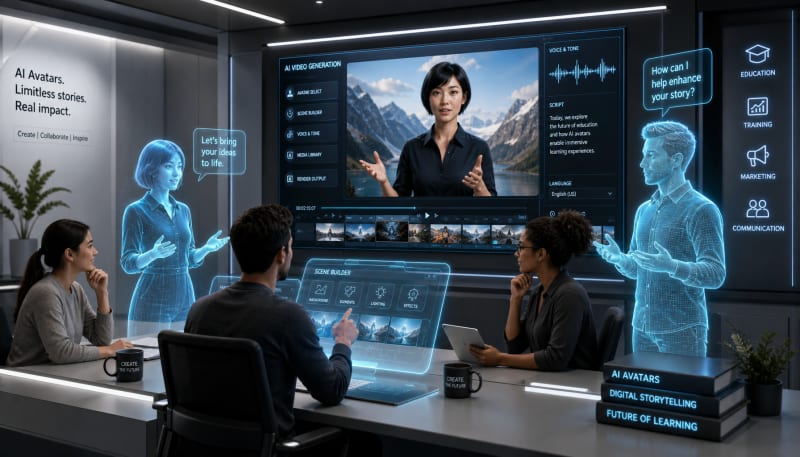
Discover how Synthesia enables scalable multilingual video production using AI presenters.
Video content dominates digital communication, but traditional video production remains expensive and time-consuming. Synthesia has emerged as a solution that uses artificial intelligence to generate professional videos without cameras, studios, or actors. The platform allows users to create videos featuring realistic AI avatars that speak in multiple languages, transforming how businesses and educators approach video content creation.
This technology represents a significant shift in content production. Instead of coordinating schedules, booking studios, and managing post-production, users simply input text and select an avatar. The AI handles the rest, generating videos that closely mimic human speech patterns and expressions.
Related: For more practical AI workflows, tools, and systems, join the NextLayer newsletter.
How Synthesia Works
Synthesia operates on deep learning models trained on extensive video datasets. The platform analyzes human speech patterns, facial movements, and lip synchronization to create realistic avatar presentations. Users begin by writing or pasting their script into the platform's interface. They then select from a library of pre-made avatars or create custom ones based on specific requirements.
The AI processes the text through text-to-speech technology while simultaneously generating corresponding facial animations. This dual process ensures that the avatar's mouth movements align naturally with the spoken words. The system also incorporates appropriate pauses, emphasis, and intonation to make the delivery sound conversational rather than robotic.
The Technology Behind AI Avatars
The core technology relies on generative adversarial networks (GANs) and neural rendering techniques. These systems learn from real human video footage to understand how faces move when speaking different phonemes and expressing various emotions. The AI doesn't simply overlay audio onto a static image; it creates dynamic, frame-by-frame animations that respond to the specific words being spoken.
Voice synthesis uses neural text-to-speech models that have been trained on hours of recorded speech. This allows the platform to offer voices in over 120 languages with natural-sounding accents and inflections.
Key Features and Capabilities
Synthesia provides several features that make it practical for various use cases. The platform includes a template library with pre-designed layouts for common video types like training modules, product demonstrations, and announcements. Users can customize backgrounds, add branding elements, insert images and videos, and incorporate text overlays without needing design expertise.

The multilingual capability stands out as particularly valuable. A single script can be converted into videos in dozens of languages without requiring translators or voice actors. The AI avatars can deliver the same message in German, Japanese, Spanish, or any other supported language while maintaining consistent visual presentation.
Custom Avatar Creation
Beyond the standard avatar library, Synthesia offers custom avatar services where organizations can create digital twins of real people. This involves recording a person speaking specific phrases in a controlled environment. The AI then learns that person's unique facial features, expressions, and voice characteristics to create a personalized avatar that can deliver any script while maintaining the individual's likeness.
Common Use Cases
Organizations across various sectors have adopted Synthesia for different purposes. Corporate learning and development teams use it extensively for training videos. Instead of re-recording content when information updates, they simply edit the script and regenerate the video. This approach dramatically reduces the cost and time associated with keeping training materials current.
Marketing teams create localized video content for international markets without the expense of multiple production shoots. A product launch video can be produced once in English, then quickly adapted for European, Asian, and Latin American audiences with appropriate language and cultural adjustments.
Educational institutions and e-learning platforms use AI avatars to deliver course content. Instructors can scale their presence across multiple courses or modules without being physically present in every video. This proves especially useful for asynchronous learning environments where students need on-demand access to instructional content.
Advantages Over Traditional Video Production
The efficiency gains are substantial. Traditional video production requires scheduling, location scouting, equipment setup, multiple takes, and editing. A simple five-minute video might require a full day of production and several days of post-production. Synthesia can generate the same video in minutes once the script is finalized.
Cost reduction represents another major advantage. Professional video production involves expenses for crew, talent, equipment rentals, and studio time. Organizations with regular video content needs can save significantly by using AI generation for appropriate content types.
Consistency in messaging and presentation becomes easier to maintain. Every video featuring the same avatar maintains identical visual quality and presentation style. There are no variations due to lighting changes, different filming days, or presenter energy levels.
Limitations and Considerations
Despite its capabilities, Synthesia has limitations. The avatars, while realistic, don't perfectly replicate human spontaneity and emotional depth. Subtle expressions and genuine emotional connection remain challenging for AI to fully capture. This makes the technology better suited for informational and instructional content rather than emotionally driven storytelling.
The platform works best with scripted content. It cannot handle improvisational or conversational formats where responses need to adapt to viewer feedback. Interactive video experiences still require human presenters or more complex AI systems.
Some viewers may find AI avatars unsettling or prefer authentic human presenters, particularly for sensitive topics or content requiring trust and empathy. Organizations need to consider their audience's preferences and the context of their message when deciding whether to use AI-generated videos.
Ethical Implications
AI avatar technology raises important ethical questions. The ability to create realistic videos of people saying things they never actually said presents potential for misuse. Synthesia addresses this through consent requirements for custom avatars and usage policies that prohibit creating content that could mislead or harm.
Transparency becomes crucial. Many organizations choose to disclose when videos feature AI avatars rather than real people. This maintains trust with audiences and prevents perceptions of deception.
The technology also impacts employment in video production and voice acting industries. While it creates new efficiencies, it potentially reduces demand for certain types of work. This shift requires thoughtful consideration of how to balance technological advancement with workforce implications.
Getting Started with Synthesia
New users can begin with Synthesia through a straightforward process. The platform offers different subscription tiers based on video volume and feature requirements. Most plans include access to the standard avatar library and basic editing tools.
Success with the platform depends largely on script quality. Well-written, conversational scripts produce better results than overly formal or complex text. Breaking content into shorter segments rather than creating long, continuous presentations tends to work better for viewer engagement.
Testing different avatars helps identify which ones resonate best with your target audience. The platform allows easy swapping of avatars while keeping the same script, making it simple to compare options before finalizing a video.
Conclusion
Synthesia represents a practical application of AI that solves real production challenges. The platform democratizes video creation by removing technical and financial barriers that previously limited who could produce professional video content. While it doesn't replace all forms of video production, it excels at creating informational, educational, and corporate content efficiently.
The technology continues to improve, with more realistic avatars and better voice synthesis emerging regularly. For organizations that need to produce regular video content, particularly in multiple languages or with frequent updates, Synthesia offers a compelling alternative to traditional production methods. Understanding its strengths and limitations allows users to make informed decisions about when and how to incorporate AI avatar videos into their content strategies.
The Practical Solution
Start by identifying one repeating video task in your organization—onboarding training, product updates, or customer communications. Replace it with Synthesia instead of defaulting to scheduling another shoot or hiring contractors. Test whether the AI-generated output meets your quality threshold for that specific use case. If it does, systematize it and redeploy your video budget toward higher-value creative work that actually requires human presence on camera.
— Kevin Marsh, Editor-in-Chief
NEXTLAYER AI
Stay Ahead of AI
Get weekly breakdowns of workflows, tools, and systems for creators & founders.
Subscribe to NextLayer AISynthetic Proof
Verified — Editorial Layer
This content has passed editorial verification for clarity, accuracy, and trust alignment.
Editor-in-Chief: Kevin Marsh
Verification Status: PASSED
Verification Status: PASSED
Comments
Post a Comment