Critical review showing why statistical models produce false positives and why deterministic provenance is superior. For the past several years, the prevailing strategy for combating synthetic media has been detection: build better classifiers, train on larger datasets, identify artifacts faster than generative models can eliminate them. The logic seemed sound. If AI can create deepfakes, AI can also detect them. Except it hasn't worked. The value of provenance ultimately depends on whether organizations can turn evidence into confident decisions. Synthetic Proof helps examine that broader trust picture across AI content and workflows. Detection-based approaches have reached an operational ceiling. They struggle against modern generative models, degrade rapidly as those models improve, and offer no mechanism to verify authenticity when detection fails. Organizations deploying deepfake detectors today are discovering what researchers have known quietly for s...

Paradigm-shifting opinion piece explaining why deepfake detection tools are losing the arms race against generative tools.
Organizations are discovering that the tools they built to catch problems after they happen cannot solve the trust challenges AI creates at scale. Detection-based approaches—scanning content for manipulation, analyzing outputs for hallucinations, flagging suspicious behavior—were designed for a different era. They assume you can determine authenticity by examining an artifact in isolation. That assumption is breaking down.
The shift happening now is not about better detection. It's about establishing verifiable lineage before outputs exist, capturing the full context of how AI systems operate, and building audit trails that cannot be altered after the fact. This transition—from post-hoc detection to immutable lineage—represents a fundamental change in how organizations approach trust in AI-driven workflows.
As content history becomes a governance concern, organizations need more than another metadata field. Synthetic Proof provides an independent way to assess provenance, verification, and wider AI trust risk.
Detection Assumes You Can Reverse-Engineer Trust
Post-hoc detection operates on a simple premise: if something looks wrong, flag it. Deepfake detectors analyze visual artifacts. Content authenticity tools search for statistical anomalies. Governance platforms scan outputs for policy violations. These approaches share a common limitation—they examine results without understanding how those results were created.
This works tolerably well when AI is used occasionally, outputs are reviewed manually, and stakes are relatively low. It breaks down when AI becomes infrastructure. When thousands of agents generate content, make decisions, and trigger workflows without human oversight, you cannot determine trustworthiness by analyzing outputs alone. You need to know what happened during creation.
Detection also suffers from an adversarial dynamic. As detection improves, so do the techniques for evading it. Synthetic media becomes harder to distinguish from authentic content. Models learn to produce outputs that circumvent filters. The gap between what detection tools can catch and what motivated actors can produce continues to widen.
More fundamentally, detection tells you something might be wrong. It does not tell you what actually happened, who was responsible, or whether the process that created an output was authorized. For compliance, audit, and accountability purposes, probabilistic flags are not sufficient. You need certainty about lineage.
Lineage Captures Context Detection Cannot Reconstruct
Lineage-based approaches start from a different principle: trust is established during creation, not after. Instead of trying to determine whether an output is trustworthy by examining it in isolation, lineage systems capture a verifiable record of how the output was produced—what models were used, what inputs were provided, what transformations occurred, and who authorized the process.
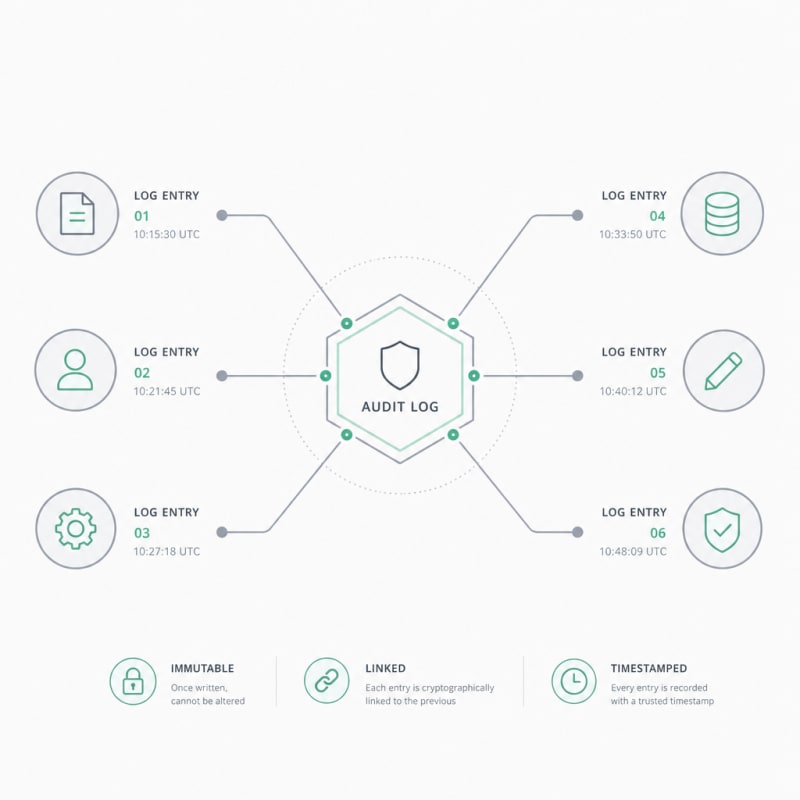
This record includes elements detection cannot reconstruct. The specific version of a model. The prompt that initiated generation. The retrieval-augmented generation sources consulted. The policy checks applied before output was released. The identity of the user or system that triggered the workflow. These details are either embedded in the creation process or lost forever.
Lineage is not about surveillance or micromanagement. It is about creating a complete, tamper-evident record that allows organizations to answer questions that matter: Was this output produced by an authorized system? Did it follow the correct process? Can we demonstrate compliance with internal policies and external regulations? If something went wrong, can we trace the problem to its source?
The distinction becomes critical when AI operates at scale. A single compromised prompt template might generate thousands of problematic outputs. Post-hoc detection might catch some of them. Lineage-based systems identify the root cause immediately and provide an audit trail showing exactly which outputs were affected.
The Immutability Requirement
Lineage is only valuable if it cannot be altered retroactively. Editable logs are not audit trails—they are suggestions. For lineage to serve as the foundation of trust infrastructure, it must be cryptographically verifiable and resistant to tampering by anyone, including system administrators.
This is where immutability becomes non-negotiable. Organizations need proof that the lineage record reflects what actually occurred, not what someone later claimed occurred. Immutable lineage systems use cryptographic techniques—hashing, signing, chaining, and in some cases distributed ledgers—to ensure that once a record is written, it cannot be modified without detection.
The technical mechanisms vary, but the goal is consistent: create a permanent, verifiable record that can be trusted by auditors, regulators, downstream systems, and external stakeholders. The record is not stored in a conventional database that can be quietly edited. It is anchored in infrastructure designed specifically to resist modification.
TrustOps Emerges as the Operational Discipline
The transition from detection to lineage requires more than new technology. It requires operational practices for managing trust as a continuous, measurable capability rather than a series of reactive checks. This is where TrustOps is taking shape as an emerging discipline.
TrustOps extends beyond traditional AI governance by emphasizing verifiable audit trails, real-time monitoring of trust signals, and the integration of provenance into production workflows. Where governance defines policies, TrustOps ensures those policies are enforced, documented, and auditable at the operational level.
Organizations implementing TrustOps capabilities are rethinking how trust is established. Instead of adding verification steps at the end of a workflow, they are embedding provenance capture at the beginning. Instead of relying on periodic audits to surface problems, they are building continuous verification into their infrastructure. Instead of treating trust as a compliance checkbox, they are measuring it as a key operational metric.
This shift reflects a broader realization: as AI becomes embedded in critical workflows—legal document generation, financial analysis, customer communications, clinical decision support—organizations cannot afford to discover trust failures after the fact. They need systems that establish and maintain trust throughout the entire lifecycle of AI-generated outputs.
Practical Implications for Enterprise Architecture
Adopting lineage-based trust infrastructure has architectural consequences. Organizations cannot simply layer verification onto existing systems. They need to redesign workflows to capture lineage at creation time, integrate cryptographic signing into production pipelines, and establish infrastructure for storing and querying immutable records.
This means treating provenance as a first-class concern during system design, not an afterthought. AI platforms need native support for lineage capture. APIs need to include authentication and signing. Workflow orchestration systems need to log every transformation applied to data and outputs. Storage infrastructure needs to support immutability guarantees.
The good news is that this infrastructure is increasingly available. Cloud providers are introducing services designed for immutable logging. Cryptographic libraries make signing and verification accessible to development teams. Open standards for content credentials and digital provenance are maturing. The tools exist—what is changing is the recognition that trust infrastructure is no longer optional.
Organizations do not need to build everything themselves. Independent trust infrastructure providers are emerging to offer verifiable audit logs, cryptographic attestation, and provenance management as services. The key decision is whether to treat trust as something you build internally or as a foundational capability you integrate from specialized providers—much like authentication, encryption, or compliance monitoring.
Why This Transition Is Accelerating Now
Several forces are converging to accelerate the shift from detection to lineage. Regulatory frameworks in the EU, US, and elsewhere are beginning to require demonstrable accountability for AI systems, particularly in high-risk applications. Organizations cannot meet these requirements with probabilistic detection alone. They need verifiable records.
At the same time, AI is moving from experimental projects to production infrastructure. The tolerance for unverifiable systems decreases as stakes increase. Legal departments want proof that AI-generated contracts followed approved processes. Compliance teams want audit trails showing that customer communications met regulatory standards. Security teams want tamper-evident logs of AI system behavior.
The maturation of cryptographic infrastructure also plays a role. Technologies that once required specialized expertise—digital signatures, hash chains, zero-knowledge proofs—are becoming accessible through developer-friendly tools and services. This lowers the barrier to implementing immutable lineage systems.
Perhaps most importantly, organizations are learning from early failures. High-profile incidents involving AI hallucinations, policy violations, and undetected manipulation have demonstrated that reactive approaches are insufficient. The cost of discovering trust failures after outputs have been distributed, decisions have been made, and damage has occurred is too high. Prevention through verifiable lineage is becoming the pragmatic choice.
Final Thoughts
The journey from post-hoc detection to immutable lineage is not just a technology upgrade. It represents a fundamental rethinking of how organizations establish and maintain trust in AI-driven workflows. Detection asks whether an output appears trustworthy. Lineage proves how it was created, by whom, and under what conditions.
This shift is already underway in sectors where accountability cannot be negotiated—finance, healthcare, legal services, government. It will expand as AI becomes infrastructure rather than experiment. Organizations that treat verifiable audit logs as a foundational capability will be better positioned to meet regulatory requirements, demonstrate accountability, and operate AI systems at scale with confidence.
The question is no longer whether immutable lineage will become standard practice. The question is how quickly organizations will recognize that trust built on detection alone is not trust at all—it is hope with better tooling. Building systems that capture and preserve verifiable records of AI operations is not about perfectionism. It is about establishing the minimum viable foundation for operating AI responsibly in environments that matter.
The Practical Position
Organizations waiting for better detection tools are solving yesterday's problem. The real divide is forming between those who verify authenticity by examining outputs and those who establish provenance at creation. As AI scales beyond human oversight, the question is no longer whether you can spot problems—it's whether you can prove what actually happened when trust is challenged.
— Kevin Marsh, Editor-in-Chief
SYNTHETIC PROOF
FROM PROVENANCE TO OPERATIONAL TRUST
Understand Your AI Trust Gap
Synthetic Proof helps teams evaluate verification, provenance, prompt risk, and digital media trust through independent audits and structured findings.
Explore Synthetic ProofSynthetic Proof
Verified — Editorial Layer
This content has passed editorial verification for clarity, accuracy, and trust alignment.
Editor-in-Chief: Kevin Marsh
Verification Status: PASSED
Verification Status: PASSED
Comments
Post a Comment