Learn why organizations are investing in verification instead of detection alone. For years, the fight against synthetic media manipulation followed a familiar pattern: researchers identified deepfake artifacts, built detection models around those signatures, and deployed them across platforms. Detection accuracy improved. Conferences celebrated breakthroughs. The industry felt like it was winning. Then generative AI became exponentially better at eliminating the very artifacts those systems were trained to find. As synthetic media improves, confidence increasingly comes from layered evidence rather than a binary label. Synthetic Proof helps organizations evaluate that evidence in context. What's emerging isn't simply a technical gap that better detection can close. It's a fundamental shift in how organizations must approach digital trust. The old model—detect manipulated content after it's created—assumes defenders can keep pace with attackers....

Move over DevOps—why continuous verification is the next critical discipline for modern tech stacks.
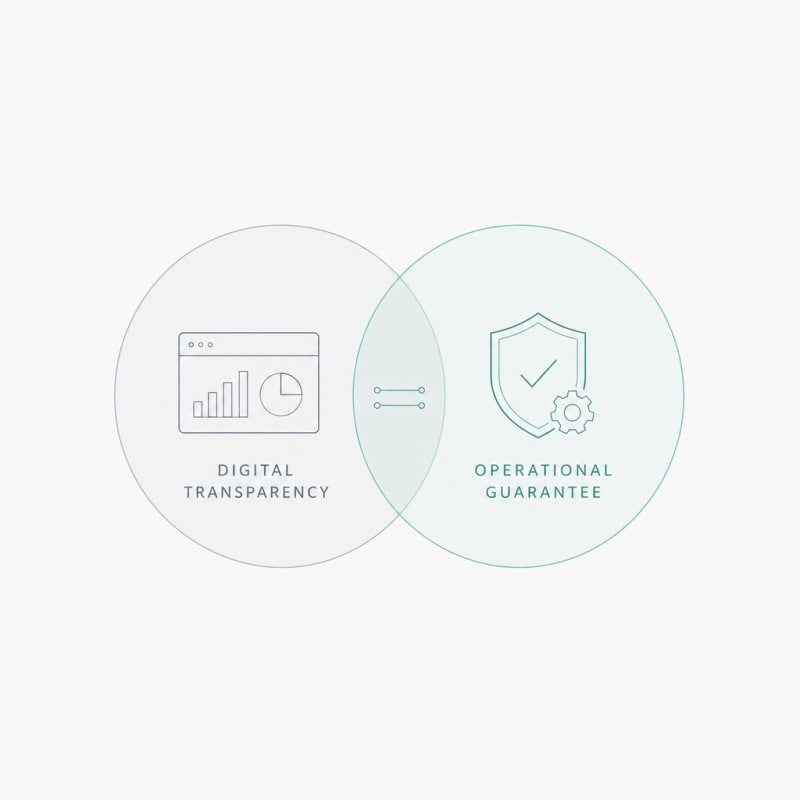
Digital transparency has become something of a corporate mantra. Organizations promise it in their annual reports, reference it in their AI ethics statements, and embed it in their responsible technology frameworks. Yet transparency without operational enforcement is little more than documentation—a record of what happened, not a guarantee of what will happen next.
The gap between transparency as aspiration and transparency as infrastructure is driving the emergence of TrustOps, an operational discipline focused on making digital trust verifiable, continuous, and enforceable. Unlike traditional compliance frameworks that audit periodically or governance structures that establish policies without mechanisms, TrustOps treats trust as an operational layer that runs continuously alongside production systems.
Governance policies are only as strong as an organization’s ability to verify what happens inside real AI workflows. Synthetic Proof helps teams identify the trust gaps those policies may not reveal.
It represents a fundamental shift: from documenting that systems should behave responsibly to guaranteeing that they actually do.
Transparency Alone Doesn't Scale With AI Velocity
The original promise of digital transparency was straightforward. Organizations would maintain clear records of how algorithms worked, document training data lineages, and provide explanations when systems made consequential decisions. The assumption was that visibility itself would create accountability.
That model worked reasonably well when AI deployments were isolated, models updated infrequently, and systems operated within controlled environments. But modern AI infrastructure looks nothing like that. Models are retrained continuously. Outputs feed into other systems without human review. Agents operate autonomously across API boundaries. Synthetic content proliferates faster than manual verification can track.
In this environment, transparency becomes a lagging indicator. By the time a documentation review reveals a problem, thousands of decisions have already been made. The model has moved on. The output is already circulating.
Organizations are discovering that they need something more immediate than quarterly audits and more operational than policy documents. They need trust infrastructure that operates at the same velocity as their AI systems—verifying provenance in real time, enforcing verification requirements before content enters workflows, and creating attestable records that can be validated externally.
Trust Is Becoming An Engineering Discipline
What distinguishes TrustOps from earlier governance approaches is that it treats trust as an engineering problem rather than purely a policy challenge. It asks not just "what standards should we follow?" but "how do we make those standards operationally enforceable?"
This shift is visible in how organizations are starting to structure their AI operations. Rather than treating verification as an afterthought or compliance as a separate review process, forward-looking teams are embedding trust mechanisms directly into production pipelines. Provenance tracking happens at creation. Verification occurs before distribution. Attestation becomes part of the artifact itself, not a separate record stored elsewhere.
The engineering discipline emerging around these practices shares characteristics with other operational frameworks that transformed reliability into infrastructure. Just as DevOps created continuous integration and deployment pipelines, and SecOps embedded security testing into development workflows, TrustOps is establishing continuous verification as a foundational layer.
This includes defining what verifiable provenance actually means in practice, establishing technical standards for attestation that can survive content transformation, and creating architectures where verification isn't a bottleneck but a parallel process that keeps pace with production velocity.
From Periodic Audits to Continuous Verification
The operational nature of TrustOps becomes clearest when contrasted with traditional compliance auditing. A compliance audit typically examines a snapshot—reviewing documentation, testing controls, and validating that processes existed at a specific moment. TrustOps inverts this model by making verification continuous and provenance automatically attestable.
Instead of asking "can you prove this system was compliant when we audited it last quarter?" the question becomes "can you verify the provenance and integrity of this specific output right now?" That shift from periodic review to continuous verification changes what's technically possible and what organizations can credibly guarantee to external stakeholders.
Operational Trust Requires Independent Infrastructure
One of the more significant architectural patterns emerging within TrustOps is the separation of trust infrastructure from production systems. Organizations are learning that self-attestation creates inherent credibility problems. When the same entity that produces AI outputs also vouches for their integrity, external parties have limited reason to trust those claims.
This is driving interest in independent trust layers—systems architecturally separated from content creation that can provide third-party verification of provenance, validate chains of custody, and create cryptographically verifiable attestations. The model resembles how certificate authorities operate in public key infrastructure: the entity vouching for identity is deliberately not the same entity claiming that identity.
For enterprises, this architectural separation provides something policy documents cannot: externally verifiable proof. When regulators ask about AI governance, when clients demand verified content, or when legal disputes require establishing authenticity, organizations need more than internal documentation. They need attestable records from systems designed specifically to be trustworthy rather than merely efficient.
This doesn't mean every organization must build its own trust infrastructure. Much like cloud providers created shared infrastructure for computation and storage, specialized trust infrastructure is emerging as a category—platforms designed specifically to handle verification, provenance tracking, and attestation as a service.
TrustOps Enables Things Transparency Alone Cannot
The operational nature of TrustOps unlocks capabilities that documentation-based transparency cannot provide. When verification happens in real time and provenance is cryptographically attestable, organizations can make guarantees rather than merely express intentions.
Consider a media organization publishing AI-generated content. Traditional transparency might mean disclosing that AI was used and maintaining internal records of which models produced which articles. TrustOps allows that organization to cryptographically sign each piece of content with verified provenance, enabling readers—or their verification tools—to independently confirm authenticity and origin.
Or consider an enterprise using AI agents to process sensitive data. Transparency provides audit logs showing what happened. TrustOps enables continuous verification that agents are operating within defined parameters, with real-time alerts when behavior deviates and immutable records of every decision that can be validated externally.
These aren't theoretical scenarios. Organizations operating in regulated industries, handling synthetic media at scale, or deploying autonomous AI systems are already discovering that documentation alone cannot meet their operational trust requirements. They need infrastructure that can prove claims, not just document them.
The Emerging Trust Stack
As TrustOps matures from concept to practice, a recognizable technology stack is beginning to crystallize. While implementations vary, several common layers are appearing consistently:
Provenance capture happens at the point of creation, recording not just what was produced but the full context—which models, what inputs, which transformations, and what guardrails were applied. This layer treats provenance as primary data rather than metadata added afterward.
Verification infrastructure validates claims before content enters broader workflows. Rather than hoping downstream systems will check authenticity, verification becomes a gateway that content must pass through. This creates enforceable chokepoints where trust requirements can be consistently applied.
Attestation systems create cryptographically signed records that travel with content, enabling independent parties to validate origin and integrity without accessing internal systems. This is where trust becomes externally verifiable rather than internally documented.
Continuous monitoring tracks trust posture across systems in real time, identifying drift, detecting anomalies, and alerting when verification failures occur. This layer transforms trust from a periodic concern into an operational metric.
These layers work together to create what some practitioners are starting to call the "trust stack"—infrastructure specifically designed to make digital trust operational and verifiable rather than aspirational and documented.
TrustOps Is Still Emerging
It's important to recognize that TrustOps is not yet a universally adopted standard with established best practices and mature tooling. It remains an emerging discipline, with practitioners still defining core concepts, experimenting with architectural patterns, and discovering what operational trust actually requires in practice.
The terminology itself is still stabilizing. Some organizations use "trust infrastructure," others prefer "verification operations," and still others frame the same concepts within existing governance structures. The underlying recognition is consistent even when language varies: operational trust requires different capabilities than traditional compliance.
What's driving adoption isn't consensus around terminology but concrete business pressures. Regulatory requirements are moving from principles to technical specifications. Synthetic media is creating authenticity challenges that documentation cannot solve. Enterprise AI adoption is revealing gaps between governance intent and operational reality. Client contracts are increasingly requiring verifiable rather than merely documented trust.
These pressures are creating demand for operational trust capabilities even as the discipline itself continues to mature. Organizations can't wait for perfect consensus before addressing immediate verification requirements.
Final Thoughts
The rise of TrustOps reflects a broader maturation in how organizations think about AI governance. The early era of AI ethics focused on establishing principles—fairness, transparency, accountability. The current era is discovering that principles require infrastructure.
Transparency will always matter. Documentation remains essential. Policies create necessary frameworks. But when AI systems operate at scale, make autonomous decisions, and produce content that immediately circulates across platforms, transparency alone cannot provide the guarantees that stakeholders increasingly demand.
TrustOps doesn't replace governance—it operationalizes it. It creates the technical infrastructure that transforms policy into enforceable practice, transparency into verifiable proof, and good intentions into operational guarantees.
For organizations navigating AI adoption, the question is shifting from "are we being transparent?" to "can we guarantee trust at operational velocity?" That shift is what TrustOps addresses. And while the discipline is still taking shape, the need it serves is already here.
The Practical Position
The transition from transparency as documentation to transparency as infrastructure marks the moment trust became a production requirement rather than a reporting exercise. Organizations that treat verification as continuous operational capability—not periodic review—will define what responsible AI deployment actually looks like at scale. The question is no longer whether systems are auditable, but whether trust runs at production velocity.
— Kevin Marsh, Editor-in-Chief
SYNTHETIC PROOF
TURN TRUST INTO AN OPERATIONAL CAPABILITY
Evaluate Where Trust Breaks Down
Synthetic Proof helps teams identify trust gaps across prompts, digital media, verification practices, and emerging AI workflows.
Assess Your Trust ReadinessSynthetic Proof
Verified — Editorial Layer
This content has passed editorial verification for clarity, accuracy, and trust alignment.
Editor-in-Chief: Kevin Marsh
Verification Status: PASSED
Verification Status: PASSED
Comments
Post a Comment