Learn why organizations are investing in verification instead of detection alone. For years, the fight against synthetic media manipulation followed a familiar pattern: researchers identified deepfake artifacts, built detection models around those signatures, and deployed them across platforms. Detection accuracy improved. Conferences celebrated breakthroughs. The industry felt like it was winning. Then generative AI became exponentially better at eliminating the very artifacts those systems were trained to find. As synthetic media improves, confidence increasingly comes from layered evidence rather than a binary label. Synthetic Proof helps organizations evaluate that evidence in context. What's emerging isn't simply a technical gap that better detection can close. It's a fundamental shift in how organizations must approach digital trust. The old model—detect manipulated content after it's created—assumes defenders can keep pace with attackers....

CISOs and risk officers defending against deepfake fraud and regulatory liability
When regulators hold executives personally accountable for algorithmic harms, the question stops being whether AI systems work well. It becomes whether leadership can prove they exercised reasonable oversight—and increasingly, that proof begins with provenance.
The regulatory environment surrounding AI has shifted from voluntary frameworks to binding obligations with personal liability provisions. The EU AI Act, emerging state-level regulations in the United States, and sector-specific guidance from financial and healthcare regulators all point toward a common expectation: organizations must demonstrate continuous knowledge of how AI systems are built, trained, deployed, and modified.
The value of provenance ultimately depends on whether organizations can turn evidence into confident decisions. Synthetic Proof helps examine that broader trust picture across AI content and workflows.
Provenance—the verifiable record of an AI system's lineage, modifications, and operational history—is rapidly moving from a technical curiosity to a compliance foundation. For executives navigating this transition, the challenge isn't understanding what provenance is. It's recognizing that without it, regulatory defense becomes nearly impossible.
Liability Is Climbing the Organizational Chart
Traditional software liability typically settled at the organizational level. Fines, settlements, and remediation costs were absorbed as corporate expenses. AI regulation is following a different trajectory.
The EU AI Act explicitly identifies "deployers" and "providers" with distinct obligations, and compliance failures can trigger penalties reaching 6% of global annual turnover. More significantly, national implementations are beginning to establish personal accountability mechanisms for executives who oversee high-risk AI systems. Securities regulators are asking pointed questions about board-level AI oversight during examinations. Employment regulators are scrutinizing algorithmic hiring tools with executives named in enforcement actions.
This isn't theoretical exposure. When a hiring algorithm produces discriminatory outcomes, regulators increasingly want to know: Did leadership understand how the system made decisions? Were changes to the model documented and reviewed? Can the organization demonstrate what version of the system was active during the period in question?
Without provenance, these questions have no satisfactory answers.
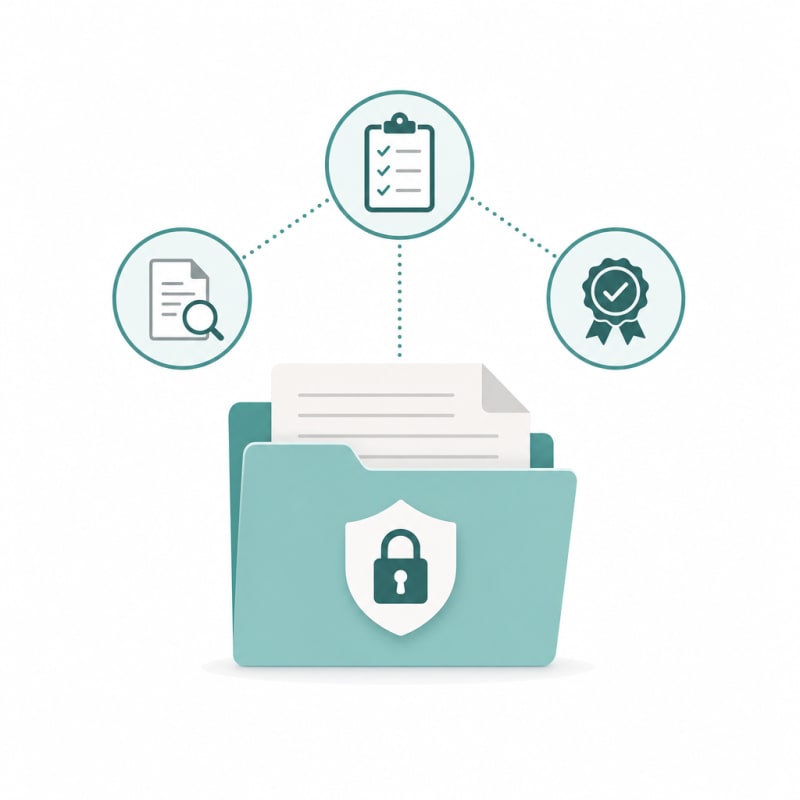
Compliance Frameworks Assume Verifiable History
Nearly every emerging AI compliance framework—whether regulatory mandate or industry standard—contains implicit or explicit provenance requirements. The structure of these obligations reveals an assumption: organizations will maintain detailed, auditable records of AI system development and deployment.
Model cards, system documentation, impact assessments, and algorithmic transparency reports all depend on knowing the history of what was built and deployed. Compliance teams are discovering that retrospective documentation is nearly worthless. Auditors and regulators expect provenance to be contemporaneous, immutable, and technically verifiable.
The challenge intensifies in environments where AI systems evolve continuously. A fraud detection model retrained weekly, a recommendation system updated daily, or a chatbot whose behavior shifts through fine-tuning presents a moving target for compliance. Without provenance infrastructure, compliance documentation describes a system that may no longer exist by the time it's reviewed.
Traditional change management processes—designed for quarterly software releases—don't translate cleanly to AI operations. Provenance creates the connective tissue between continuous AI evolution and compliance frameworks built around snapshot audits.
The "Reasonable Care" Standard Requires Evidence
Legal liability often hinges on whether executives exercised reasonable care in overseeing operations. For AI systems, demonstrating reasonable care increasingly means proving leadership had visibility into system behavior, lineage, and modification history.
Reasonable care arguments collapse when an organization cannot answer basic questions: What data trained this model? When did we last update it? Who approved the changes? What testing occurred before deployment? Which version is currently serving production traffic?
These aren't edge cases. They represent standard discovery requests in AI-related litigation and regulatory investigations. Provenance determines whether an organization enters these proceedings with documented evidence of oversight or with gaps that suggest negligence.
The shift is particularly acute for executives who delegate AI development to technical teams without maintaining independent verification mechanisms. Courts and regulators are signaling that executive responsibility includes ensuring verifiable oversight infrastructure exists—not simply trusting that teams follow best practices.
Provenance as Defensive Documentation
Provenance operates as a contemporaneous record created during normal operations rather than compiled defensively after an incident. This temporal dimension matters enormously in legal and regulatory contexts.
Post-incident documentation is presumed self-serving. Provenance records generated automatically during development and deployment carry greater evidentiary weight because they weren't created in anticipation of scrutiny. When executives can produce cryptographically signed records showing what model was deployed when, what data it used, and who authorized changes, they transform compliance from a narrative exercise into a technical demonstration.
Board-Level Risk Committees Are Asking New Questions
AI oversight is migrating into formal board governance structures. Risk committees that once focused on financial controls and cybersecurity now include AI systems in their oversight scope. The questions being asked in these settings reveal how provenance has become inseparable from governance.
Board members increasingly want to understand: How do we know what AI systems are running in production? Can we trace a system's decision back to its training data and model version? If a regulator investigates, what evidence can we produce? How quickly can we identify and remediate a problematic model?
These aren't questions technical teams can answer with architecture diagrams or code reviews. They require infrastructure that creates auditable trails across the AI lifecycle. Provenance becomes the mechanism that translates technical operations into board-comprehensible evidence of control.
The pattern emerging across regulated industries suggests that boards will eventually require provenance reporting with the same rigor they expect for financial controls. The organizations building this infrastructure now are preparing for expectations that will become standard, not optional.
Regulatory Examinations Are Testing Documentation Depth
Early regulatory examinations of AI systems reveal a consistent pattern: surface-level documentation fails scrutiny. Regulators arrive with technical expertise and forensic expectations, asking for evidence that many organizations have never been required to maintain.
Financial services regulators examining algorithmic trading systems want to see model lineage connecting current behavior to training decisions made months earlier. Healthcare regulators reviewing diagnostic AI tools expect detailed provenance showing exactly what data influenced which model versions. Employment agencies investigating hiring algorithms demand evidence of testing protocols tied to specific model iterations.
Organizations without provenance infrastructure find themselves reconstructing history from Git logs, Slack messages, and employee recollections—an exercise that satisfies neither regulators nor executives facing liability questions. The organizations navigating these examinations successfully share a common attribute: they implemented provenance as operational infrastructure rather than compliance theater.
Third-Party AI Amplifies Provenance Requirements
The compliance challenge intensifies when organizations deploy third-party AI systems. Executives remain accountable for algorithmic outcomes even when they didn't build the underlying models. This reality makes provenance a contractual and operational necessity, not just an internal control.
Vendor-provided AI systems introduce opacity that regulators explicitly reject as an excuse for non-compliance. "We didn't build it" doesn't satisfy liability standards when an organization chose to deploy the system. Provenance becomes the mechanism for maintaining oversight of external AI capabilities.
Forward-looking procurement teams now include provenance requirements in vendor contracts: verifiable model lineage, documented training data characteristics, cryptographic proof of model versions, and audit trails showing when updates occur. These aren't technical preferences—they're attempts to operationalize the reasonable care standard when AI capabilities come from outside the organization.
Final Thoughts
Provenance has transitioned from a research concept to a compliance foundation faster than most governance frameworks anticipated. For executives, the implication is direct: personal liability for AI systems increasingly depends on being able to prove continuous, verifiable oversight.
The organizations treating provenance as a compliance checkbox will find themselves unprepared for forensic regulatory examinations and litigation discovery. Those building provenance as operational infrastructure—capturing model lineage, training decisions, deployment history, and modification records as a natural byproduct of AI operations—are constructing the evidentiary foundation that modern AI liability requires.
Regulatory frameworks will continue evolving, but the underlying expectation has stabilized: executives must demonstrate they knew what AI systems were doing, why they were doing it, and who authorized changes. Provenance is how that demonstration happens. The question facing leadership teams isn't whether to build this capability, but whether they'll do it before the first regulatory examination arrives asking for evidence they don't have.
SYNTHETIC PROOF
FROM PROVENANCE TO OPERATIONAL TRUST
Understand Your AI Trust Gap
Synthetic Proof helps teams evaluate verification, provenance, prompt risk, and digital media trust through independent audits and structured findings.
Explore Synthetic ProofSynthetic Proof
Verified — Editorial Layer
This content has passed editorial verification for clarity, accuracy, and trust alignment.
Editor-in-Chief: Kevin Marsh
Verification Status: PASSED
Verification Status: PASSED
Comments
Post a Comment