Explore how cryptographic verification is moving directly into capture devices. Every image captured by a modern camera passes through dozens of processing stages before it becomes a file. Color correction, noise reduction, compression—these transformations happen invisibly, in milliseconds, before the photograph ever reaches storage. This pipeline has been optimized for decades to produce better-looking images. Now it's being redesigned for something entirely different: trust. In-sensor cryptography represents a fundamental shift in how digital content establishes authenticity. Rather than adding verification layers after capture, these systems embed cryptographic signatures directly within the sensor hardware itself. The content is signed at the moment light hits silicon, before any downstream system can alter, manipulate, or fabricate the record. The move from AI policy to operational trust requires independent evidence. Synthetic Proof helps organizatio...
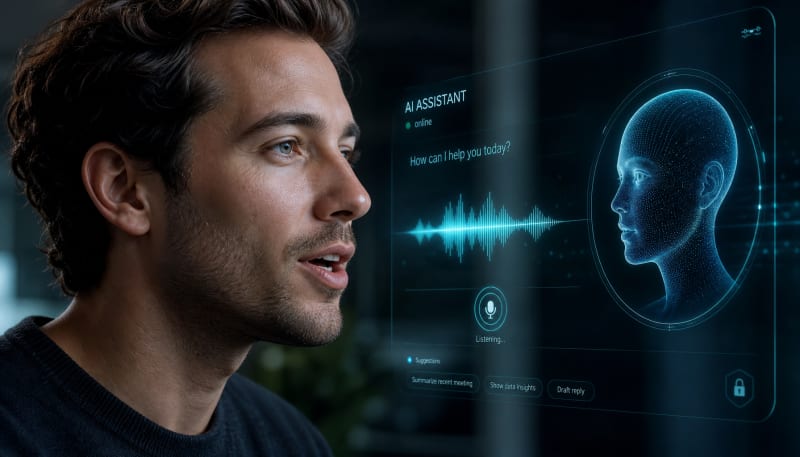
Explore how modern AI systems are producing increasingly convincing synthetic humans.
We've reached a turning point in synthetic media. AI voice cloning technology has become remarkably sophisticated, capable of replicating human speech patterns, accents, and emotional inflections with startling accuracy. But voice alone is only half the equation. The real breakthrough happening right now is in lip-syncing technology that can match these cloned voices to video with near-perfect accuracy, creating synthetic content that's increasingly difficult to distinguish from reality.
This convergence of voice cloning and advanced lip-sync AI is reshaping everything from content creation to digital communication. It's also raising critical questions about trust, authenticity, and how we verify what we see and hear online.
Related: If your workflow touches verification, provenance, or suspicious media, Synthetic Proof can help audit content and reduce trust risk.
How Lip-Sync AI Actually Works
Modern lip-sync technology uses deep learning models trained on massive datasets of human speech and facial movements. These systems analyze the phonetic components of audio—the individual sounds that make up words—and map them to corresponding mouth shapes, jaw movements, and even subtle facial muscle contractions.
The latest models go far beyond simple mouth matching. They account for co-articulation, where the pronunciation of one sound is influenced by adjacent sounds. They capture micro-expressions, head movements, and the natural variations in how different people speak. Some systems can even adjust for factors like speaking speed, emotional tone, and individual speaking styles.
The Technical Leap Forward
What makes current lip-sync AI particularly impressive is its ability to generate these animations in real-time or near-real-time. Earlier systems required extensive processing time and manual adjustment. Today's models can produce convincing results in seconds, making them practical for live applications like video calls, virtual assistants, and interactive avatars.
The technology relies on several neural network architectures working in concert. Generative adversarial networks (GANs) create the visual output while discriminator networks evaluate how realistic it looks. Transformer models help maintain temporal consistency across frames, ensuring smooth, natural movement rather than jittery artifacts.
Voice Cloning Meets Visual Synthesis
The pairing of voice cloning with lip-sync technology creates something more powerful than either component alone. Voice cloning systems can now capture someone's vocal identity from just a few minutes of sample audio. When combined with video synthesis, they can make it appear that a person said something they never actually said, with both the audio and video elements perfectly aligned.

This combination has legitimate applications across multiple industries. Content creators can correct mistakes without reshooting entire scenes. Filmmakers can adjust dialogue in post-production or create multilingual versions where actors appear to speak different languages fluently. Educators can produce personalized video content at scale.
But the same technology that enables these beneficial uses also creates significant risks. Deepfakes—synthetic media designed to deceive—have become more accessible and convincing. The barrier to entry has dropped dramatically, with tools that once required technical expertise now available through simple web interfaces.
The Trust Problem We Can't Ignore
As lip-sync AI becomes indistinguishable from reality, we face a fundamental challenge to one of our most basic assumptions: that seeing and hearing something means it actually happened. This erosion of trust has far-reaching implications for journalism, legal evidence, personal relationships, and democratic processes.
The problem extends beyond obvious deepfakes. Even when synthetic media is used legitimately, the mere existence of convincing fake technology creates what researchers call the "liar's dividend"—the ability for anyone to dismiss genuine evidence as fake. A real video can be discredited simply by claiming it's synthetic, regardless of the truth.
Detection Is A Moving Target
Detection systems exist, but they're engaged in an ongoing arms race with generation technology. Current detection methods look for telltale artifacts: unnatural blinking patterns, inconsistent lighting, temporal discontinuities between frames, or anomalies in facial geometry. But as generation models improve, these artifacts disappear.
Machine learning-based detectors can identify patterns invisible to human observers, but they require constant updating as new synthesis techniques emerge. More concerning, adversarial techniques can specifically target detection systems, creating synthetic media designed to evade identification.
The Future Of Synthetic Speech And Video
Looking ahead, lip-sync and voice cloning technology will only become more sophisticated. Real-time applications will expand beyond current use cases. We're likely to see virtual influencers and AI assistants that look and sound completely human. Remote communication tools will offer synthetic video options that reduce bandwidth requirements while maintaining visual presence.
The technology may also become more personalized and accessible. Imagine video conferencing where AI automatically generates ideal lighting and framing, or educational content that adapts not just in content but in delivery style to match individual learning preferences. These applications could enhance how we communicate and learn.
But this future requires addressing the trust deficit head-on. Technical solutions alone won't suffice. We need robust authentication systems, clear labeling standards for synthetic media, legal frameworks that address malicious use, and widespread digital literacy about what's possible with these tools.
Building Systems For Verification
Several approaches are emerging to verify authentic content. Cryptographic signing can create an unalterable chain of custody from capture to distribution, proving that content hasn't been manipulated. Blockchain-based systems offer decentralized verification without relying on single authorities. Hardware-level authentication, where cameras embed verification data at the moment of capture, could provide stronger guarantees than software-only solutions.
Major tech platforms and media organizations are collaborating on content provenance standards like C2PA (Coalition for Content Provenance and Authenticity), which embeds metadata about content origins and any modifications. While not foolproof, these standards create infrastructure for establishing what's real.
Conclusion
Perfect lip-syncing for AI voice clones represents both a remarkable technical achievement and a significant societal challenge. The technology delivers genuine benefits for content creation, accessibility, and communication efficiency. At the same time, it undermines our ability to trust what we see and hear, with implications that extend into every aspect of digital life.
The path forward requires acknowledging both the opportunities and risks. We can't uninvent these technologies, nor would we necessarily want to given their legitimate applications. Instead, we need to build robust systems for authentication and verification while developing the critical thinking skills to navigate an environment where synthetic media is ubiquitous. The trust we place in digital content moving forward will depend less on assumptions about what's technically possible and more on verifiable provenance, transparent labeling, and informed skepticism about content origins.
The Practical Solution
First begin assuming any video with perfect lip-sync could be synthetic, especially if it appears in unexpected contexts or contains surprising statements. Verify source authenticity before sharing, looking for official confirmations, and examining metadata when possible. For your own content, consider adding cryptographic signatures or watermarks that prove authenticity. The goal isn't paranoia—it's building new habits for a world where "seeing is believing" no longer applies.
— Kevin Marsh, Editor-in-Chief
SYNTHETIC PROOF
Verify What You See
Synthetic media is getting harder to identify. Get verification-focused analysis for suspicious content.
Run a Synthetic Proof AuditSynthetic Proof
Verified — Editorial Layer
This content has passed editorial verification for clarity, accuracy, and trust alignment.
Editor-in-Chief: Kevin Marsh
Verification Status: PASSED
Verification Status: PASSED
Comments
Post a Comment