Learn how digital provenance evolved from research into a cornerstone of AI governance and enterprise trust. A decade ago, provenance was mostly a concern for art collectors and archivists. Today, it's becoming foundational infrastructure for organizations deploying AI at scale. The shift happened quietly, then suddenly—driven not by technology alone, but by a collision of regulatory pressure, reputational risk, and the uncomfortable realization that most organizations cannot answer basic questions about their AI systems. Digital provenance—the verifiable record of an asset's origin, transformations, and custody—has evolved from a niche technical capability into a governance requirement. The reasons are straightforward: AI systems are being deployed in consequential settings, regulators are demanding accountability, and the penalties for getting it wrong are no longer theoretical. Provenance is becoming one part of a larger operational trust question: ca...

Turn Creative Chaos Into Structured Systems: A Guide to Professional, Scalable Freelance Operations
Most freelancers start out juggling everything manually—emails scattered across threads, inconsistent deliverables, and different processes for every client. This approach works when you have two or three clients, but it breaks down fast as you scale. The difference between freelancers who struggle with chaos and those who run smooth operations isn't talent or luck. It's systems.
Building reliable client workflows and operations transforms how you deliver services. You spend less time reinventing the wheel for each project, reduce errors, and create a professional experience that clients notice and value. This guide walks through the specific components of a solid freelance workflow system and how to implement them without overcomplicating your business.
Related: If your work depends on client delivery, handoffs, and repeatable execution, The Freelancer & Contractor Hub helps structure the process.
Map Your Current Service Delivery Process
Before building better systems, you need to see what's actually happening now. Most freelancers skip this step and jump straight to tools, which leads to implementing solutions for problems they don't actually have.
Start by documenting your current process from initial contact to final delivery. Write down every step you take when working with a client: the first call, the proposal, the contract, the kickoff, each phase of work, revisions, delivery, and invoicing. Be specific about what happens at each stage, even the messy parts.
This exercise reveals patterns you didn't know existed. You'll spot redundant steps, points where projects typically stall, and gaps in your contractor systems where things fall through the cracks. One common discovery is that freelancers often repeat the same explanations to every new client because they haven't documented their process anywhere.
Create A Standardized Client Onboarding Sequence
Onboarding sets the tone for the entire relationship and is where most operational problems start. A standard onboarding sequence eliminates confusion and establishes clear expectations from day one.
Build Your Intake Process
Your intake should collect all the information you need to deliver great work without back-and-forth emails. This includes project details, brand assets, access credentials, preferred communication channels, and decision-maker contacts. Create a form or questionnaire that captures everything upfront.
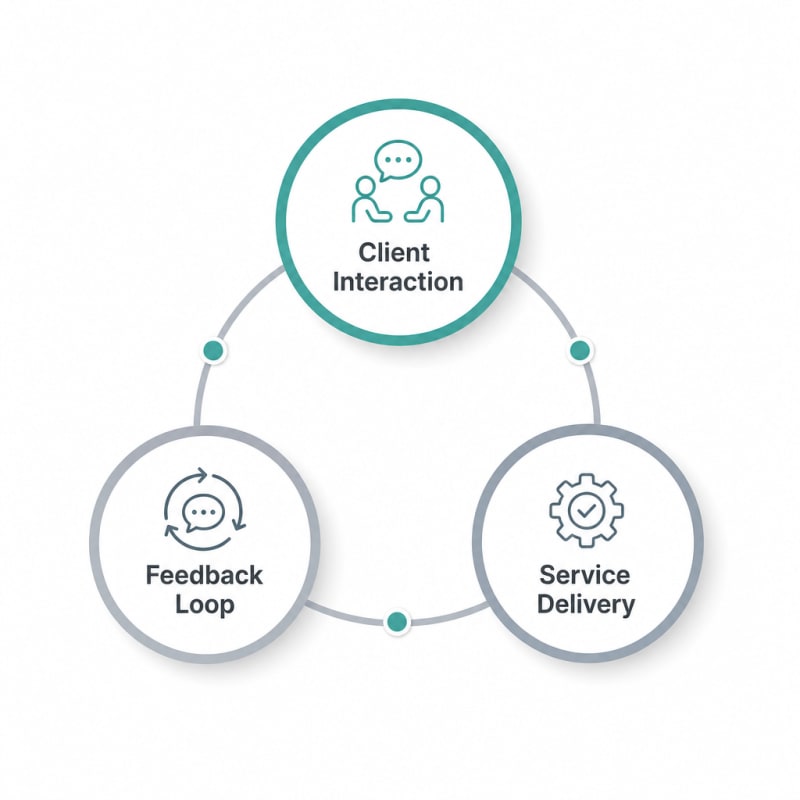
Include questions about timeline expectations, revision policies, and what success looks like for the client. These answers become reference points throughout the project and help prevent scope creep.
Set Communication Guidelines Early
Establish how and when you'll communicate. Specify your response time, preferred platforms, meeting frequency, and availability windows. If you don't check email after 6 PM or on weekends, state that clearly. If urgent requests need a specific subject line or channel, explain that.
This prevents the expectation that you're available 24/7 and protects your working boundaries. Many client frustrations stem from mismatched communication expectations that were never explicitly discussed.
Build Templates For Recurring Deliverables
Every service you provide likely has components that repeat across clients. These are opportunities to implement templates that speed up your freelance workflow and ensure consistency.
Templates don't mean cookie-cutter work. They're starting points that contain your standard structure, quality checks, and formatting, which you then customize for each client's specific needs. A website designer might have templates for discovery documents, site architecture proposals, and content inventories. A writer might template article briefs, editorial calendars, and revision tracking sheets.
The goal is to eliminate the time spent recreating structure and focus your energy on the custom, high-value work that clients actually pay for. Templates also reduce mistakes because you're less likely to forget crucial elements when they're built into your starting point.
Document Your Quality Standards
Create checklists for each type of deliverable that outline your quality standards. What does "done" look like for each work type? What checks do you run before sending something to a client? What format should files be in?
These checklists become part of your contractor systems and help maintain quality even when you're rushed or distracted. They're especially valuable if you eventually bring on subcontractors or assistants.
Implement Project Management Structure
You don't need complex software to implement project management structure, but you do need a consistent place where project information lives and a method for tracking progress.
At minimum, your service delivery process should include a way to track what's in progress, what's waiting on client input, what's blocked, and what's coming up next. This visibility prevents things from slipping through the cracks and helps you communicate proactively with clients about status.
Choose Your Project Tracking Method
The right tool depends on your work style and client preferences. Simple spreadsheets work well for freelancers with straightforward services and few concurrent projects. Project management platforms offer more structure for complex deliverables or team collaboration.
Whatever you choose, the key is consistency. Use the same system for every client so you always know where to look for project information. Switching systems based on client preference creates the fragmentation you're trying to eliminate.
Create Clear Project Phases
Break your client operations into distinct phases with specific outcomes for each. Instead of one amorphous "project" phase, you might have discovery, draft, revision, and delivery phases. Each phase should have defined endpoints and approval points.
This structure makes it easier to manage client expectations, track progress, and identify where delays occur. It also simplifies scoping and pricing because you can estimate based on standardized phases rather than guessing at an entire project.
Automate Repetitive Communications
A significant portion of freelance workflow involves routine communications: project kickoff emails, status updates, revision requests, invoice reminders, and feedback requests. These are prime candidates for automation.
Email templates with standard language that you customize for each situation save time and ensure you don't forget important information. Set up templates for common scenarios like project delays, clarification requests, scope change discussions, and project completion.
For truly routine messages, consider automation tools that send emails based on triggers. A payment reminder can go out automatically three days before an invoice is due. A project status update can be scheduled weekly. An onboarding welcome email can send as soon as a contract is signed.
The time savings compound quickly. What takes thirty minutes per week manually becomes five minutes with templates and nearly zero minutes with automation.
Establish File Management Conventions
Disorganized files waste time and look unprofessional when you can't quickly locate what a client needs. Your contractor systems should include consistent naming conventions and folder structures.
Create a standard folder hierarchy for each client or project. This might include folders for source files, deliverables, revisions, contracts, invoices, and reference materials. Use the same structure every time so you build muscle memory for where things live.
File naming conventions prevent confusion about which version is current and what each file contains. A simple format like "ClientName_ProjectName_AssetType_VersionNumber_Date" makes files self-explanatory and sortable.
Decide where files live: your computer, cloud storage, or shared client folders. Whatever you choose, maintain consistency and keep regular backups. The best system is worthless if files are scattered across multiple platforms or lost to a hard drive failure.
Build Buffer Time Into Your Workflow
Smooth client operations require acknowledging that things take longer than expected and interruptions happen. Freelancers who schedule every hour back-to-back have no room for the inevitable delays and rush requests that arise.
Build buffer time between project phases, before deadlines, and in your weekly schedule. If you estimate a deliverable will take six hours, block eight. If a client deadline is Friday, plan to finish by Wednesday. This padding absorbs unexpected complications without derailing your entire schedule.
Buffer time also allows for the unglamorous administrative work that's part of running a freelance business: invoicing, proposals, email management, and system maintenance. These tasks don't generate revenue directly but are essential to smooth service delivery process management.
Create Feedback And Revision Protocols
Unclear feedback processes lead to endless revision cycles and scope creep. Your freelance workflow should include specific protocols for how clients provide feedback and how revisions are handled.
Specify how you want to receive feedback: consolidated in one document, through specific software, or via structured forms. Discourage scattered feedback across email threads, text messages, and comment sections. Explain that consolidated feedback helps you address all points efficiently.
Define what constitutes a revision versus new work. Be clear about how many revision rounds are included in your pricing and what happens if clients exceed that. Create a simple revision request form that asks clients to prioritize their changes and clarify whether feedback is mandatory or optional.
This structure protects both parties. Clients get a clear path to request changes, and you maintain boundaries around scope and time investment.
Review And Refine Your Systems Regularly
The systems you build aren't set in stone. As your business evolves, your contractor systems should adapt. Schedule quarterly reviews of your freelance workflow to identify what's working and what needs adjustment.
Ask yourself which steps consistently cause delays, where clients seem confused, and which parts of your process feel clunky or inefficient. Look for patterns in the problems you encounter. If you're always clarifying the same points, that information should be in your onboarding. If certain phases always take longer than estimated, adjust your planning.
Refinement is also an opportunity to eliminate steps that no longer serve you. Just because you've always done something doesn't mean it's necessary. Cut anything that doesn't directly contribute to quality delivery or client satisfaction.
Conclusion
Building smoother client workflows and operations isn't about adding complexity to your freelance business. It's about creating reliable systems that handle the routine parts of service delivery so you can focus on the work that requires your expertise and creativity.
Start with the areas causing you the most friction right now. If onboarding is chaotic, tackle that first. If you're constantly digging through emails for project details, fix your documentation system. Incremental improvements compound over time into a dramatically more efficient operation.
The freelancers who build strong service delivery processes create capacity for growth without burning out. They deliver consistent quality, meet deadlines reliably, and provide a professional experience that commands premium rates. These advantages come not from working harder but from working within systems that support excellent execution.
SNAPSE
Run Client Work More Smoothly
Use structured systems for delivery, handoff, and repeatable execution.
Explore Freelancer & Contractor HubSynthetic Proof
Verified — Editorial Layer
This content has passed editorial verification for clarity, accuracy, and trust alignment.
Editor-in-Chief: Kevin Marsh
Verification Status: PASSED
Verification Status: PASSED
Comments
Post a Comment