Learn why organizations are investing in verification instead of detection alone. For years, the fight against synthetic media manipulation followed a familiar pattern: researchers identified deepfake artifacts, built detection models around those signatures, and deployed them across platforms. Detection accuracy improved. Conferences celebrated breakthroughs. The industry felt like it was winning. Then generative AI became exponentially better at eliminating the very artifacts those systems were trained to find. As synthetic media improves, confidence increasingly comes from layered evidence rather than a binary label. Synthetic Proof helps organizations evaluate that evidence in context. What's emerging isn't simply a technical gap that better detection can close. It's a fundamental shift in how organizations must approach digital trust. The old model—detect manipulated content after it's created—assumes defenders can keep pace with attackers....

Learn how digital provenance evolved from research into a cornerstone of AI governance and enterprise trust.
A decade ago, provenance was mostly a concern for art collectors and archivists. Today, it's becoming foundational infrastructure for organizations deploying AI at scale. The shift happened quietly, then suddenly—driven not by technology alone, but by a collision of regulatory pressure, reputational risk, and the uncomfortable realization that most organizations cannot answer basic questions about their AI systems.
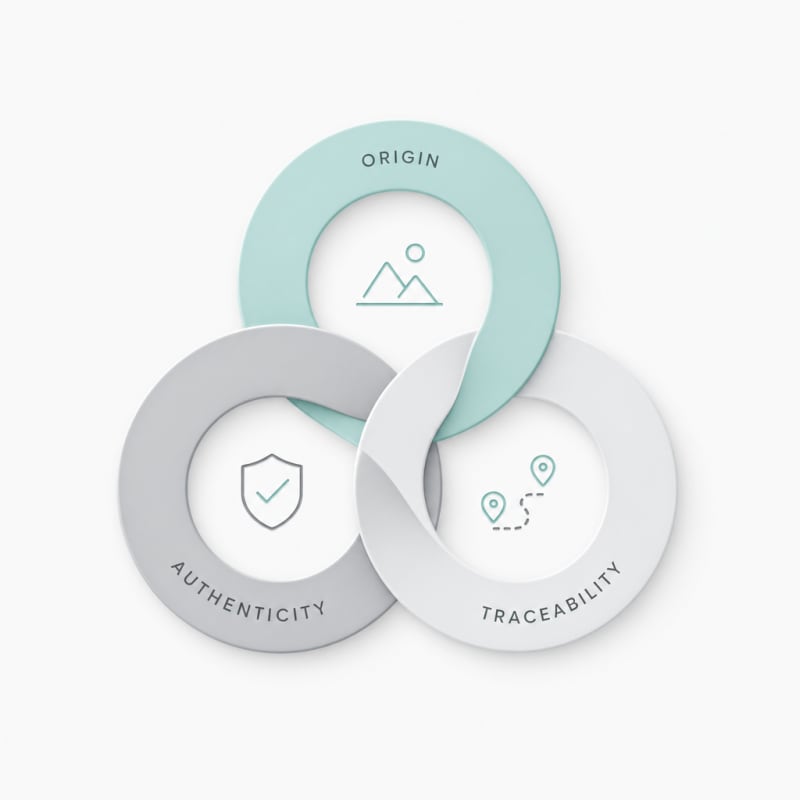
Digital provenance—the verifiable record of an asset's origin, transformations, and custody—has evolved from a niche technical capability into a governance requirement. The reasons are straightforward: AI systems are being deployed in consequential settings, regulators are demanding accountability, and the penalties for getting it wrong are no longer theoretical.
Provenance is becoming one part of a larger operational trust question: can an organization verify its content, prompts, and AI workflows consistently? Synthetic Proof helps teams evaluate where those trust signals hold—and where gaps remain.
Understanding why provenance became critical requires looking beyond the technology itself. It requires examining how AI changed the nature of digital assets, how governance failures exposed structural gaps, and how organizations are now building the trust infrastructure they wish they'd had from the beginning.
AI Changed What Digital Assets Are—And What They Can Do
Digital provenance existed before generative AI, but it served a different purpose. Early provenance systems tracked document versions, verified software signatures, or authenticated digital media for journalism and legal proceedings. The stakes were real, but the scope was limited.
Generative AI fundamentally altered the equation. Models can now produce images, videos, code, and text indistinguishable from human-created content. A single model can generate thousands of outputs in minutes. Those outputs can be modified, combined, or used as inputs to other systems. The result is an exponential increase in digital assets whose origins are opaque and whose authenticity cannot be assumed.
The problem compounds when those assets enter decision-making workflows. A generated financial summary might inform investment decisions. A synthetic training dataset might shape a hiring algorithm. A modified image might become evidence in a compliance audit. Without provenance, organizations have no systematic way to trace these assets back to their source, understand their transformations, or verify their integrity.
This isn't hypothetical. Organizations are already discovering AI-generated content in their knowledge bases, training pipelines, and customer communications—often without knowing how it got there or whether it's accurate. Provenance became critical the moment AI-generated content became operationally indistinguishable from human-created content.
Governance Demands Answers Provenance Was Built to Provide
Regulatory frameworks for AI share a common thread: they require organizations to explain how their systems work, document what data was used, and demonstrate accountability when things go wrong. The EU AI Act, algorithmic accountability laws, and emerging sector-specific regulations all presume that organizations maintain detailed records of their AI operations.
Provenance is the infrastructure that makes those records possible. It captures the lineage of training data, documents model versions, tracks who made changes and when, and preserves the chain of custody as assets move through systems. Without provenance, compliance becomes an archaeological exercise—reconstructing history from incomplete logs, scattered documentation, and institutional memory.
The shift is already visible in how organizations approach governance. Early AI governance efforts focused on principles and oversight committees. Current efforts focus on operational capabilities: Can we trace this output to its source model? Can we verify this dataset hasn't been tampered with? Can we reconstruct the state of our AI systems as they existed six months ago?
These are provenance questions. Governance frameworks provide the policies; provenance provides the records those policies require. One without the other produces compliance theater rather than actual accountability.
The Audit Problem Made Provenance Unavoidable
AI audits—whether internal, regulatory, or third-party—require evidence. Auditors need to verify claims about model performance, validate data handling practices, and confirm that systems operate as documented. When organizations cannot produce verifiable records, audits stall or fail entirely.
Provenance solves the evidence problem. It creates tamper-evident records of AI operations that auditors can independently verify. This isn't just about satisfying regulators. Organizations are discovering that provenance dramatically reduces the cost and friction of audits by eliminating the manual effort required to reconstruct system history.
Trust Infrastructure Emerged Because Centralized Solutions Don't Scale
Early attempts to address provenance through internal tooling revealed a structural problem: AI operations increasingly span organizational boundaries. Models are trained by one team, fine-tuned by another, deployed by a third, and consumed by external partners. Training data might come from vendors, public datasets, or user-generated content. Outputs might flow into partner systems or regulatory submissions.
Centralized provenance systems cannot operate effectively across these boundaries. They require all parties to use compatible tools, trust each other's record-keeping, and maintain synchronized infrastructure. In practice, this creates integration nightmares and trust bottlenecks.
The solution taking shape is independent trust infrastructure—third-party systems that capture provenance records without requiring participants to share underlying data or adopt identical platforms. These systems function like escrow services or notaries: they create verifiable records of digital events without taking possession of the assets themselves.
This architectural shift is significant. It means provenance can operate across organizational boundaries, survive changes in internal tooling, and provide a neutral record that all parties can reference. Independent infrastructure also addresses a credibility problem: self-reported provenance lacks the verification value that external stakeholders require.
Synthetic Content Made Provenance a Defensive Requirement
The rise of synthetic media transformed provenance from an operational nicety into a defensive necessity. Organizations now face scenarios where employees might unknowingly use AI-generated content, where manipulated assets might enter official records, or where synthetic outputs might be misrepresented as authentic source material.
Provenance provides the answer to a question that's becoming increasingly common: "How do we know this is real?" For organizations publishing content, provenance allows them to cryptographically prove authenticity. For organizations consuming content, it provides a mechanism to verify origins before making decisions based on potentially synthetic inputs.
The financial sector illustrates the stakes. Banks are deploying AI to analyze documents, generate reports, and support lending decisions. If synthetic content enters those workflows undetected, the consequences range from flawed decisions to compliance violations. Provenance systems allow these organizations to flag AI-generated content, trace it to its source, and apply appropriate controls.
Provenance Is Moving From Project Feature to Platform Requirement
The clearest signal that provenance has become critical is its migration from specialized use cases into platform requirements. Major AI platforms, content management systems, and enterprise software vendors are beginning to integrate provenance capabilities as default functionality rather than optional features.
This shift reflects a broader recognition: provenance cannot be retrofitted effectively. Organizations that deploy AI without provenance infrastructure discover that reconstructing asset lineage after the fact is expensive, incomplete, and often impossible. The systems being built today assume provenance will be captured from the beginning.
The technical implementation varies, but the pattern is consistent. Provenance systems typically create cryptographic records of key events—asset creation, modification, model inference, data transformations—and store them in a way that prevents retroactive tampering. These records form an auditable chain that can be verified independently of the systems that created them.
What makes modern provenance infrastructure different from earlier version control or logging systems is the emphasis on verification and cross-organizational compatibility. Provenance isn't just about keeping records; it's about creating records that external parties can trust and verify without requiring access to internal systems.
The Business Case Crystallized Around Risk Reduction
Provenance gained organizational traction when the business case shifted from potential future benefits to concrete current risks. The initial pitch—"we might need this eventually"—proved less compelling than the revised pitch: "we cannot answer basic audit questions without this."
Organizations are discovering that provenance addresses several distinct risk categories simultaneously. It reduces compliance risk by creating the documentation regulators require. It reduces operational risk by making AI systems more debuggable and incidents easier to investigate. It reduces reputational risk by allowing organizations to verify their own claims about AI practices.
The financial analysis increasingly favors early adoption. Implementing provenance infrastructure before it's urgently needed costs less than implementing it under regulatory pressure or during an active crisis. Organizations that built provenance capabilities proactively report that the investment paid for itself through reduced audit costs and faster incident response.
Final Thoughts
Digital provenance became critical not because of a single technology breakthrough, but because AI created conditions where the absence of provenance became untenable. Organizations deploying AI at scale need to answer questions about asset origins, demonstrate accountability to regulators, verify the authenticity of content, and maintain audit trails that survive organizational and technical changes.
The shift is still underway. Many organizations are only beginning to recognize provenance as foundational infrastructure rather than a specialized capability. But the trajectory is clear: provenance is moving from optional to expected, from project-level tooling to platform-level infrastructure, from technical curiosity to governance requirement.
For organizations evaluating their AI trust and risk posture, the question is no longer whether to implement provenance capabilities, but how quickly they can build or adopt the infrastructure that makes provenance operationally viable. The organizations getting this right are treating provenance as they would treat security or compliance—as a foundational layer that enables everything else rather than a feature to add later.
The trust layer AI governance requires is taking shape. Provenance is the foundation that layer is built on.
The Practical Position
Digital provenance didn't become critical because regulators demanded it—it became critical because organizations lost the ability to answer fundamental questions about their own systems. The real shift isn't technical; it's the recognition that accountability is impossible without infrastructure. Trust at scale requires verifiable history, not better policies.
— Kevin Marsh, Editor-in-Chief
SYNTHETIC PROOF
FROM PROVENANCE TO OPERATIONAL TRUST
Understand Your AI Trust Gap
Synthetic Proof helps teams evaluate verification, provenance, prompt risk, and digital media trust through independent audits and structured findings.
Explore Synthetic ProofSynthetic Proof
Verified — Editorial Layer
This content has passed editorial verification for clarity, accuracy, and trust alignment.
Editor-in-Chief: Kevin Marsh
Verification Status: PASSED
Verification Status: PASSED
Comments
Post a Comment