Workflow optimization piece for digital asset management (DAM) administrators and media archivists. Digital assets rarely stay still. They're edited, reformatted, republished, reassembled into new compositions, distributed across platforms, and eventually archived. At each stage, something changes—sometimes intentionally, sometimes not. The question isn't whether assets evolve. It's whether organizations can prove how they evolved. Most digital asset management systems track where files live and who touched them last. Far fewer can demonstrate an unbroken chain of custody from creation through archive. That gap is becoming a problem—not just for media companies worried about authenticity, but for regulated industries, enterprises managing AI training data, and anyone who might need to defend the integrity of their digital records in court or audit. Provenance is becoming one part of a larger operational trust question: can an organization verify its...
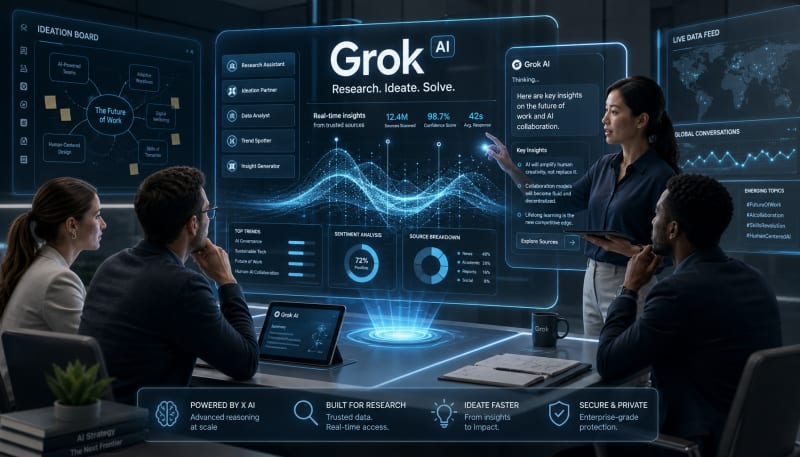
Discover how Grok is being used for live research, ideation, trend analysis, and AI-assisted workflows.
The landscape of AI workflow tools has evolved rapidly, with professionals constantly seeking solutions that provide more than just text generation. Grok AI, developed by xAI, has emerged as a distinctive option for teams and individuals who need real-time information access integrated directly into their creative and analytical processes. Unlike traditional AI assistants that rely solely on training data with fixed cutoff dates, Grok offers something different: live access to current information through its integration with X (formerly Twitter).
This capability positions Grok as more than just another conversational AI. It becomes a research assistant, trend monitor, and ideation partner that understands what's happening right now. For professionals building modern AI workflows, this real-time dimension opens up possibilities that static models simply can't match.
Related: If your work depends on client delivery, handoffs, and repeatable execution, The Freelancer & Contractor Hub helps structure the process.
Real-Time Research Integration
Most AI workflow tools struggle with currency of information. When you're developing content strategies, monitoring competitive landscapes, or responding to emerging trends, outdated data creates blind spots. Grok AI addresses this limitation by pulling current information from X's platform, giving users access to breaking news, trending discussions, and real-time public sentiment.
This makes Grok particularly valuable for workflows that require:
- Monitoring industry conversations and identifying emerging themes
- Validating assumptions against current market discussions
- Understanding public reaction to recent events or announcements
- Identifying influencers and thought leaders actively discussing specific topics
The integration isn't just about speed—it's about context. When xai grok pulls information, it's gathering signals from actual conversations happening in professional and public spaces, not just archived web content.
Ideation with Current Context
Ideation sessions often suffer from working in informational vacuums. Teams brainstorm based on what they knew last week or last month, missing shifts that happened yesterday. Incorporating Grok into ideation workflows changes this dynamic by ensuring that creative processes are informed by the latest developments.
Content Strategy Development
Content teams can use Grok to identify what topics are gaining traction before they become oversaturated. By analyzing trending conversations and emerging narratives, strategists can position their content to ride the wave of interest rather than arriving after it's peaked. This proactive approach to content planning represents a significant advantage in competitive spaces.
Product and Campaign Insights
Product teams benefit from understanding how similar solutions are being discussed in real-time. What features are users praising? What pain points keep surfacing in conversations? Grok can surface these insights quickly, informing product roadmaps and marketing messaging with current user sentiment rather than relying solely on formal research that may already be outdated.
Trend Monitoring as a Workflow Layer
Traditional trend monitoring requires multiple tools, manual aggregation, and significant time investment. Building Grok into your ai workflow tools stack creates a centralized point for trend intelligence that connects directly to your other processes.
Rather than treating trend monitoring as a separate activity, teams can weave it into their existing workflows:
- Before writing analysis pieces, check current discussions to ensure relevance
- During planning meetings, validate assumptions against real-time data
- When scheduling content, cross-reference with trending topics for optimal timing
- While developing messaging, ensure language aligns with current community terminology
This continuous integration of current intelligence prevents the disconnect that often occurs between planning and execution.
Complementing Other AI Tools
Grok AI works best not as a replacement for existing tools but as a complement to them. Most organizations use multiple AI solutions—Claude for detailed analysis, ChatGPT for content drafting, specialized tools for specific tasks. Grok fits into this ecosystem as the real-time intelligence layer.
A practical workflow might involve using Grok to identify trending topics and gather current context, then feeding those insights into other tools for content creation, analysis, or strategy development. This layered approach leverages the strengths of each platform while compensating for individual limitations.
Limitations and Considerations
Understanding where Grok fits means also recognizing where it doesn't. The platform's real-time capabilities come with trade-offs. Information pulled from social platforms reflects those spaces—which may not represent comprehensive market views or academic rigor. The quality of insights depends heavily on what's being discussed on X at any given moment.
For workflows requiring deep technical accuracy, peer-reviewed information, or comprehensive historical analysis, Grok should supplement rather than replace traditional research methods. It excels at capturing current discourse and sentiment, but doesn't replace structured data analysis or formal research processes.
Building Grok into Team Workflows
Successfully integrating any new tool requires intentional process design. For teams adopting Grok, this means identifying specific touchpoints where real-time intelligence adds value:
- Establish regular check-ins where team members share insights gathered from Grok
- Create templates for trend reports that combine Grok insights with other data sources
- Develop protocols for verifying information before acting on it
- Train team members on effective prompting for different types of intelligence gathering
The goal isn't to add another tool that people ignore, but to create genuine utility that improves decisions and outputs.
Conclusion
The value of grok ai in modern workflows comes down to timing and context. As organizations navigate increasingly fast-moving markets and conversations, having access to current intelligence isn't just convenient—it's competitive advantage. Positioning Grok as a research, ideation, and monitoring layer creates workflows that are responsive rather than reactive, informed rather than assumptive.
The most effective implementations don't try to make Grok do everything, but focus it on what it does distinctively well: providing current context that keeps other AI workflow tools grounded in present reality. For teams building sophisticated AI workflows, this real-time dimension fills a gap that traditional models leave open, creating more dynamic and responsive processes that better serve today's pace of change.
SNAPSE
Run Client Work More Smoothly
Use structured systems for delivery, handoff, and repeatable execution.
Explore Freelancer & Contractor HubSynthetic Proof
Verified — Editorial Layer
This content has passed editorial verification for clarity, accuracy, and trust alignment.
Editor-in-Chief: Kevin Marsh
Verification Status: PASSED
Verification Status: PASSED
Comments
Post a Comment