Learn why organizations are investing in verification instead of detection alone. For years, the fight against synthetic media manipulation followed a familiar pattern: researchers identified deepfake artifacts, built detection models around those signatures, and deployed them across platforms. Detection accuracy improved. Conferences celebrated breakthroughs. The industry felt like it was winning. Then generative AI became exponentially better at eliminating the very artifacts those systems were trained to find. As synthetic media improves, confidence increasingly comes from layered evidence rather than a binary label. Synthetic Proof helps organizations evaluate that evidence in context. What's emerging isn't simply a technical gap that better detection can close. It's a fundamental shift in how organizations must approach digital trust. The old model—detect manipulated content after it's created—assumes defenders can keep pace with attackers....

Exploring the Impact of digital trust In the AI era
Trust is the currency of the AI industry. As artificial intelligence becomes more sophisticated and widespread, clients need assurance that the content, models, and solutions your agency delivers are authentic, traceable, and ethically produced. Without clear mechanisms to verify the origins and integrity of AI-generated work, even the most capable agencies risk losing credibility in an increasingly skeptical market.
The challenge isn't just about producing quality work—it's about proving it. As deepfakes, synthetic media, and AI-generated misinformation proliferate, establishing digital provenance and content authenticity has shifted from a nice-to-have to a business imperative. Clients want to know where their AI outputs come from, how they were created, and whether they can stand behind them publicly.
Related: If your workflow touches verification, provenance, or suspicious media, Synthetic Proof can help audit content and reduce trust risk.
Why AI Images Spread Faster Than Verifications
Digital provenance refers to the documented history of a piece of content or data, from its creation through every modification and transformation. For AI agencies, this means maintaining a verifiable record of how content was generated, which models were used, what training data informed those models, and who made decisions along the way.
Think of digital provenance as a chain of custody for your AI outputs. Just as museums document the ownership history of artworks to verify authenticity, AI agencies need systems that track the lineage of their deliverables. This becomes particularly critical when your agency produces content at scale or develops custom AI solutions for clients in regulated industries.
Why Content Authenticity Matters for AI Agencies
Content authenticity addresses a fundamental question: is this content what it claims to be? For AI agencies, authenticity concerns extend beyond simple plagiarism detection. Clients need to know whether AI-generated content was produced using ethical data sources, whether human oversight was applied at critical junctures, and whether the output aligns with stated methodologies.
When your agency can demonstrate content authenticity, you're not just preventing fraud—you're building a competitive advantage. Organizations increasingly face regulatory scrutiny around AI use, and they'll gravitate toward partners who can provide clear documentation of their processes and outputs.
Implementing Transparent Documentation Systems
Documentation is the foundation of trust in AI services. Your agency should maintain detailed records of every significant decision and process involved in delivering AI solutions. This includes the selection criteria for models, data sources and their licensing status, preprocessing steps applied to training data, human review checkpoints, and version control for all deliverables.
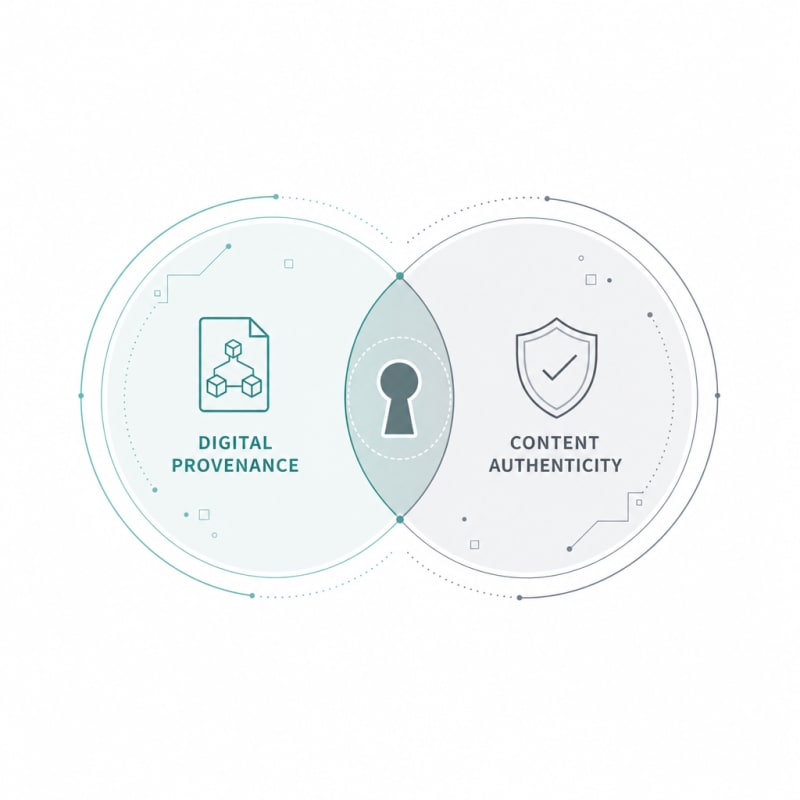
The key is making this documentation accessible without overwhelming clients. Consider creating standardized reports that accompany major deliverables, outlining the provenance of the work in clear language. These reports should answer the questions clients are most likely to ask: What AI systems were involved? What data informed the outputs? Who reviewed the results? What quality controls were applied?
Establishing Verification Mechanisms
Verification mechanisms provide clients with ways to independently confirm the authenticity and provenance of your work. This might include cryptographic signatures on deliverables, blockchain-based timestamping for version histories, third-party audits of your processes, or integration with emerging content authentication standards.
Several industry initiatives are developing standards for AI content verification. The Coalition for Content Provenance and Authenticity (C2PA), for example, has created specifications for embedding metadata directly into digital content. By adopting these standards early, your agency positions itself as forward-thinking and aligned with best practices.
Building Internal Accountability Structures
External verification only works when backed by robust internal processes. Your agency needs clear accountability structures that define who is responsible for maintaining provenance records, reviewing AI outputs for quality and ethical concerns, and ensuring compliance with client requirements and regulatory standards.
Create a culture where provenance documentation is treated as essential to the work itself, not an administrative afterthought. Train your team on why these practices matter and how they protect both the agency and its clients. When everyone understands their role in maintaining trust, compliance becomes part of your operational DNA.
Communicating Your Provenance Practices
Having strong provenance systems means little if clients don't know about them. Your agency should actively communicate its approach to digital provenance and content authenticity through case studies that detail your verification processes, technical documentation that explains your methodologies, client onboarding materials that set expectations, and public statements about your commitment to transparency.
Don't assume clients understand the technical details. Frame your provenance practices in terms of business outcomes: reduced risk, regulatory compliance, brand protection, and competitive advantage. Show how your verification systems solve real problems they face.
Addressing the Human Element
Digital provenance systems are only as trustworthy as the people who operate them. Your agency's reputation ultimately rests on the expertise, judgment, and integrity of your team. Invest in ongoing education about AI ethics, bias detection, and responsible development practices.
Be transparent about the role humans play in your AI workflows. Clients want to know that experienced professionals are making critical decisions, not just rubber-stamping automated outputs. Highlight where human expertise adds value—in data curation, model selection, output review, and quality assurance.
Preparing for Regulatory Evolution
AI regulation is evolving rapidly across jurisdictions. The European Union's AI Act, various state-level initiatives in the United States, and sector-specific rules all point toward increased scrutiny of AI systems and outputs. Agencies that can demonstrate robust provenance practices will find themselves ahead of regulatory curves rather than scrambling to catch up.
Stay informed about regulatory developments relevant to your clients' industries. Build flexibility into your documentation systems so you can adapt as requirements change. Consider obtaining relevant certifications or participating in industry working groups focused on AI governance and standards.
Conclusion
Trust in AI agencies isn't built through claims alone—it requires demonstrable systems for ensuring digital provenance and content authenticity. By implementing transparent documentation practices, establishing verification mechanisms, and communicating your commitment to accountability, your agency can differentiate itself in a crowded market where trust is increasingly scarce.
The agencies that will thrive in the coming years are those that recognize provenance not as a compliance burden but as a strategic asset. When clients can trace the lineage of your work, verify its authenticity, and trust your processes, they become long-term partners rather than one-time customers. Start building these systems now, before market pressures or regulatory requirements force your hand, and you'll establish your agency as a trusted leader in the AI space.
SYNTHETIC PROOF
Verify What You See
Synthetic media is getting harder to identify. Get verification-focused analysis for suspicious content.
Run a Synthetic Proof AuditSynthetic Proof
Verified — Editorial Layer
This content has passed editorial verification for clarity, accuracy, and trust alignment.
Editor-in-Chief: Kevin Marsh
Verification Status: PASSED
Verification Status: PASSED
Comments
Post a Comment