Learn why organizations are investing in verification instead of detection alone. For years, the fight against synthetic media manipulation followed a familiar pattern: researchers identified deepfake artifacts, built detection models around those signatures, and deployed them across platforms. Detection accuracy improved. Conferences celebrated breakthroughs. The industry felt like it was winning. Then generative AI became exponentially better at eliminating the very artifacts those systems were trained to find. As synthetic media improves, confidence increasingly comes from layered evidence rather than a binary label. Synthetic Proof helps organizations evaluate that evidence in context. What's emerging isn't simply a technical gap that better detection can close. It's a fundamental shift in how organizations must approach digital trust. The old model—detect manipulated content after it's created—assumes defenders can keep pace with attackers....
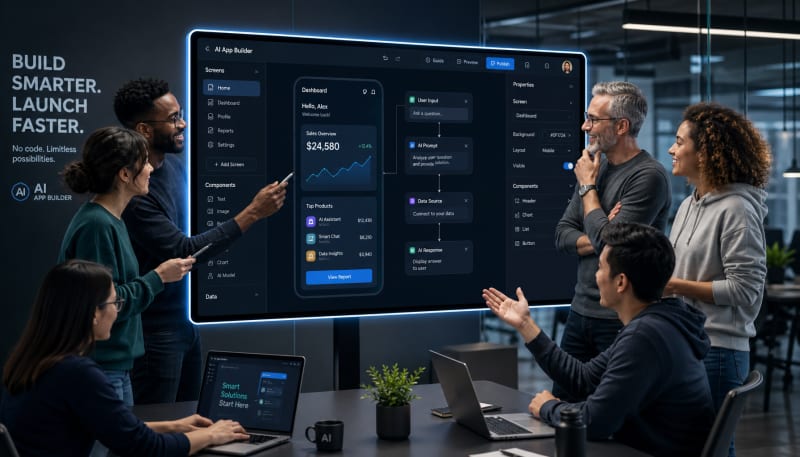
Discover how AI-powered development tools are lowering barriers to software creation.
The software development landscape is undergoing a fundamental shift. For decades, building applications required deep technical expertise, years of coding education, and fluency in multiple programming languages. Today, no code app builders and AI app generators are dismantling these barriers, enabling a new class of creators to build sophisticated software without writing a single line of code.
This democratization of software development has given rise to what industry analysts call "citizen developers"—entrepreneurs, small business owners, marketers, designers, and domain experts who are now building functional applications to solve real problems in their industries. The movement represents more than just accessible tools; it signals a fundamental rethinking of who gets to create technology and how innovation happens.
Related: For more practical AI workflows, tools, and systems, join the NextLayer newsletter.
The Rise of Citizen Developers
Citizen developers are professionals who create applications for themselves or their organizations without formal programming training. They understand their business problems intimately and can now translate that knowledge directly into working software. A marketing manager can build a custom lead qualification tool. A fitness instructor can create a client management app. A restaurant owner can develop an inventory tracking system tailored to their specific needs.
According to recent industry research, citizen developers now outnumber traditional software engineers in many enterprises. This shift isn't replacing professional developers but rather expanding the total pool of people capable of creating software solutions. The traditional development bottleneck—where business needs far exceed IT capacity—is finally being addressed by empowering those closest to the problems to build their own solutions.
How AI App Generators Are Changing the Game
The latest generation of no code platforms has integrated artificial intelligence to make app building even more accessible. AI app generators can now interpret natural language descriptions of what users want to build and automatically generate functional interfaces, workflows, and database structures.
Intelligent Assistance Throughout the Build Process
Modern AI-powered platforms offer contextual suggestions as users design their applications. If you're building a customer relationship management system, the AI recognizes patterns and recommends common features like contact fields, pipeline stages, and email integration. This guided approach helps non-technical users avoid common pitfalls and adopt best practices without needing to understand the underlying technical principles.
Automated Backend Infrastructure
What traditionally required database configuration, server management, and API development now happens automatically. No code app builders handle the technical infrastructure behind the scenes, allowing creators to focus on user experience and business logic. Security updates, performance optimization, and scalability concerns are managed by the platform rather than the individual creator.
Real-World Applications Across Industries
The impact of no code tools extends across virtually every sector. Healthcare administrators are building patient intake systems customized to their specific workflows. Real estate agents are creating property management platforms that integrate exactly the features they need. Nonprofit organizations are developing volunteer coordination apps without burning through limited budgets on custom development.
In education, teachers are building classroom management tools and interactive learning applications tailored to their students' needs. Financial advisors are creating client portals that automate routine communications while maintaining compliance requirements. The common thread is that domain experts are now empowered to solve their own software challenges rather than explaining their needs to external developers who may not fully grasp the nuances.
The Learning Curve: Easier But Not Effortless
While no code platforms dramatically reduce barriers to entry, building effective applications still requires learning and practice. Users need to understand basic concepts like data relationships, conditional logic, and user flow design. The difference is that these concepts can be learned through visual interfaces and immediate feedback rather than abstract code syntax.
Most platforms offer extensive template libraries, video tutorials, and active communities where citizen developers share knowledge and troubleshoot challenges together. The learning curve is measured in days or weeks rather than months or years, making it realistic for busy professionals to acquire app-building skills alongside their primary responsibilities.
Limitations and When to Call in Professional Developers
No code platforms excel at specific use cases but aren't suitable for every application. Highly complex algorithms, applications requiring millisecond response times, or systems with extremely specialized technical requirements may still need traditional development approaches. Most platforms also have limitations around customization depth—you can build within the framework provided, but highly specific functionality might not be possible.
The smart approach for many organizations is hybrid: using no code tools for internal applications, prototypes, and straightforward customer-facing tools while reserving professional development resources for core products and technically demanding features. This strategy maximizes the value of both citizen developers and professional engineering teams.
The Economic Impact of Accessible Development
The financial implications of no code platforms are substantial. Small businesses and startups that previously couldn't afford custom software development can now build sophisticated tools for a fraction of traditional costs. The pricing models—typically subscription-based with scaling tiers—make budgeting predictable and accessible.
Beyond direct cost savings, there's significant value in speed. Applications that would take months to scope, develop, and deploy through traditional methods can be built and iterated in days. This acceleration enables faster experimentation, quicker responses to market changes, and more agile business operations overall.
Security and Governance Considerations
As citizen development expands, organizations face new governance challenges. When anyone can build an app, how do you ensure data security, regulatory compliance, and integration with existing systems? Leading enterprises are establishing citizen development programs with clear guidelines, approved platforms, and oversight processes.
Reputable no code platforms build security into their infrastructure, handling authentication, encryption, and access controls through standardized, tested systems. For citizen developers, this actually improves security compared to creating workarounds using spreadsheets or unsanctioned tools. The key is choosing established platforms with strong security track records and appropriate compliance certifications for your industry.
The Future of Software Creation
The trajectory is clear: software creation will continue becoming more accessible. AI capabilities will grow more sophisticated, natural language interfaces will improve, and the gap between imagination and implementation will narrow further. We're likely approaching a future where describing what you want is sufficient to create a working application.
This doesn't mean professional developers become obsolete. Instead, their roles evolve toward more complex challenges, system architecture, and enabling citizen developers through platform development and governance. The overall effect is an expansion of technological capability across society, with more people able to create digital solutions to the problems they encounter.
Conclusion
No code app builders and AI app generators are fundamentally reshaping who can build software and how innovation happens. By empowering citizen developers—entrepreneurs, creators, and operators without traditional coding backgrounds—these platforms are unlocking human potential that was previously constrained by technical barriers. The result is more diverse solutions, faster innovation cycles, and digital transformation that reaches organizations previously left behind by traditional software development economics. While these tools won't replace professional developers, they're creating a future where technical implementation is no longer the bottleneck preventing good ideas from becoming reality. The democratization of software development is here, and it's expanding what's possible for millions of creative problem-solvers worldwide.
NEXTLAYER AI
Stay Ahead of AI
Get weekly breakdowns of workflows, tools, and systems for creators & founders.
Subscribe to NextLayer AISynthetic Proof
Verified — Editorial Layer
This content has passed editorial verification for clarity, accuracy, and trust alignment.
Editor-in-Chief: Kevin Marsh
Verification Status: PASSED
Verification Status: PASSED
Comments
Post a Comment