Learn why organizations are investing in verification instead of detection alone. For years, the fight against synthetic media manipulation followed a familiar pattern: researchers identified deepfake artifacts, built detection models around those signatures, and deployed them across platforms. Detection accuracy improved. Conferences celebrated breakthroughs. The industry felt like it was winning. Then generative AI became exponentially better at eliminating the very artifacts those systems were trained to find. As synthetic media improves, confidence increasingly comes from layered evidence rather than a binary label. Synthetic Proof helps organizations evaluate that evidence in context. What's emerging isn't simply a technical gap that better detection can close. It's a fundamental shift in how organizations must approach digital trust. The old model—detect manipulated content after it's created—assumes defenders can keep pace with attackers....
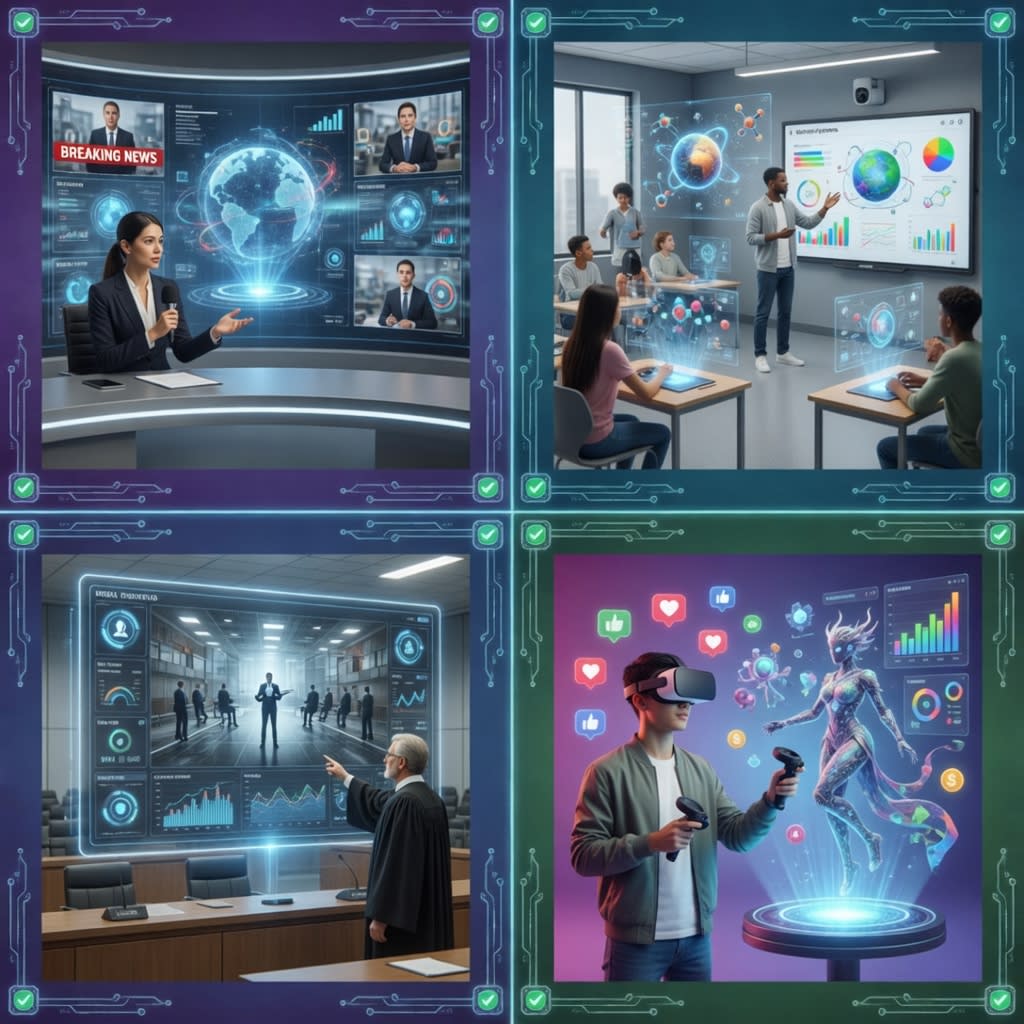
Top Industries Utilizing AI Verification
AI verification is rapidly gaining traction across various sectors, primarily due to its ability to enhance trust and reliability in digital content. As industries focus on maintaining authenticity and reducing misinformation, they are increasingly turning to AI tools to detect AI-generated images and other forms of content. In this article, we will explore the top industries utilizing AI verification and how they are leveraging these advanced technologies to foster trust.
1. Media and Journalism
The media industry is one of the most significant sectors investing in AI verification. With the rise of fake news and misinformation, news organizations are adopting AI tools to analyze images and videos for authenticity. AI verification helps journalists confirm the source and originality of content before publishing.
Related: If your workflow touches verification, provenance, or suspicious media, Synthetic Proof can help audit content and reduce trust risk.
Tools and Techniques
Media companies utilize various detect AI images tools to assess the credibility of images. These tools often employ algorithms to analyze metadata, detect inconsistencies, and highlight possible alterations. Techniques like reverse image search and pixel-level analysis are commonly used to verify the authenticity of visual content.
2. E-Commerce
In the e-commerce sector, trust is paramount. Companies are increasingly employing AI verification technologies to validate product images and reviews. AI tools help ensure that images of products are genuine and that reviews come from verified purchasers, thereby enhancing the buying experience.
Ensuring Authenticity
By utilizing AI verification, e-commerce platforms can detect AI-generated images of products and filter out fake reviews. This not only helps in improving customer satisfaction but also builds a stronger brand reputation. AI tools analyze user-generated content and match it with verified images, making online shopping more trustworthy.
3. Financial Services
The financial sector is another significant adopter of AI verification. Banks and financial institutions are focused on identity verification and fraud detection. AI tools help in verifying customer identities through analyzing documents and biometric data.
Fraud Prevention
AI verification systems can analyze photographs of identification documents and compare them with live images of customers. This process considerably reduces the likelihood of identity theft and fraud. Detecting alterations in documents through AI ensures that online transactions remain secure.
4. Social Media
Social media platforms are under constant scrutiny for the authenticity of the content shared by users. To combat misinformation, these platforms are increasingly implementing AI verification methods to assess the validity of posted images and videos.
Maintaining Integrity
AI tools enable social media companies to automatically flag suspicious content. This includes detecting AI-generated images and deepfakes. By ensuring that content adheres to community guidelines and maintaining the integrity of information, these platforms can maintain user trust and safety.
5. Education
The education sector is leveraging AI verification to maintain academic integrity. As online learning becomes more popular, universities and educational institutions utilize AI tools to verify the authenticity of submitted materials and assessments.
Plagiarism Detection
AI verification techniques can identify instances of plagiarism and check the originality of students' submissions. By analyzing written texts and comparing them with existing literature, AI tools ensure that academic standards are upheld.
6. Healthcare
Healthcare is also benefitting from AI verification technologies, particularly in data management and patient identity verification. In this sensitive industry, ensuring that patient records and images are accurate is crucial for effective treatment.
Image Validation
AI tools can verify medical images, ensuring that they are not altered or misrepresented. This is particularly important in diagnostics, where the accuracy of scans and reports can significantly impact patient care.
7. Art and Entertainment
The art and entertainment industry faces unique challenges regarding authenticity and intellectual property. As digital art becomes more popular, AI verification helps artists and collectors authenticate their works.
Protecting Intellectual Property
Using AI verification, artists can prove the originality of their digital creations. Moreover, galleries and auction houses employ AI tools to assess the value and authenticity of artworks before transactions, thus protecting both artists and buyers.
Conclusion
AI verification is becoming increasingly vital across diverse industries, from media and e-commerce to healthcare and art. By employing detect AI images tools and other advanced technologies, these sectors are enhancing trust and authenticity in their respective fields. As technology continues to evolve, we can expect AI verification to play an even more significant role in establishing credibility in the digital landscape.
The Practical Solution
To practically capitalize on AI verification in your sector, start by recognizing its ability to enhance integrity in digital content. Don't just adopt it; understand its underpinnings and areas of application well enough to tailor your tools to the unique demands of your industry. Whether you're checking for deepfakes in journalism, verifying product images in e-commerce, or validating patient identities in healthcare, make sure your AI verification methods are robust, accurate, and driven by a clear purpose.
— Kevin Marsh, Editor-in-Chief
Want the practical AI breakdown without the noise?
Get high-signal insights on AI trust, workflows, and systems — without the noise.
Join the NextLayer Newsletter
Synthetic Proof
Verified — Editorial Layer
This content has passed editorial verification for clarity, accuracy, and trust alignment.
Editor-in-Chief: Kevin Marsh
Verification Status: PASSED
Verification Status: PASSED
Comments
Post a Comment