Learn why organizations are investing in verification instead of detection alone. For years, the fight against synthetic media manipulation followed a familiar pattern: researchers identified deepfake artifacts, built detection models around those signatures, and deployed them across platforms. Detection accuracy improved. Conferences celebrated breakthroughs. The industry felt like it was winning. Then generative AI became exponentially better at eliminating the very artifacts those systems were trained to find. As synthetic media improves, confidence increasingly comes from layered evidence rather than a binary label. Synthetic Proof helps organizations evaluate that evidence in context. What's emerging isn't simply a technical gap that better detection can close. It's a fundamental shift in how organizations must approach digital trust. The old model—detect manipulated content after it's created—assumes defenders can keep pace with attackers....
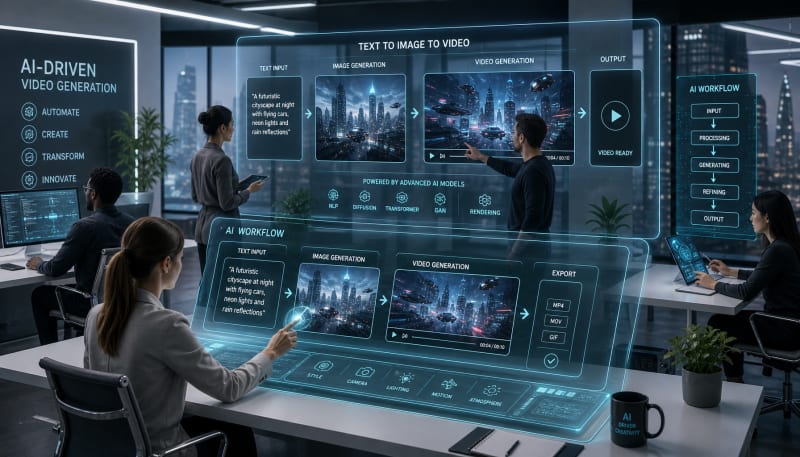
Exploring The New World of AI Content Creation
Text-to-image video generators are reshaping how creators, marketers, and businesses produce visual content. These AI systems transform written descriptions into dynamic videos, eliminating traditional production bottlenecks and costs. As part of broader ai future trends, these tools represent a fundamental shift in content creation workflows.
Understanding the distinction between ai systems vs tools matters here. While some platforms offer simple generation capabilities, others provide comprehensive systems that integrate into existing production pipelines. The right choice depends on your automation strategy and how these solutions fit within your broader ai infrastructure.
Related: If you want the full operating system for AI workflows, prompts, ideation, and execution, Snapse OS brings the pieces together.
1. Runway Gen-2
Runway Gen-2 leads the pack with its sophisticated text-to-video capabilities. The platform converts text prompts into high-quality video clips up to 18 seconds long, with options to extend duration through additional generation passes.
What sets Runway apart is its integration capabilities. The platform connects seamlessly with professional editing software, making it suitable for teams building scalable ai workflows future-proofed for evolving production needs. The interface supports iterative refinement, allowing creators to adjust prompts and parameters until results match their vision.
Key Features
- Motion brush for controlled animation
- Camera movement controls
- Style consistency across generations
- API access for workflow automation
2. Pika Labs
Pika Labs offers an accessible entry point for creators exploring text-to-video generation. The platform excels at creating short-form content, with particular strength in maintaining visual coherence across frames.
The tool integrates directly into Discord, lowering barriers to entry while still providing professional-grade output. For teams developing an automation strategy, Pika's straightforward approach reduces training time and accelerates adoption.
3. Stable Video Diffusion
Stability AI's video offering extends their image generation expertise into motion. As an open-source solution, Stable Video Diffusion gives technical teams complete control over their ai infrastructure.

This matters for organizations requiring on-premise deployment or custom modifications. The open architecture supports integration with existing tools and databases, making it ideal for companies building proprietary content generation systems.
Technical Advantages
- Self-hosting capability
- Model fine-tuning options
- No usage restrictions
- Complete data privacy
4. Synthesia
Synthesia focuses specifically on avatar-based video generation. While not a pure text-to-video system in the creative sense, it transforms scripts into professional presentation videos with AI-generated speakers.
The platform shines for corporate communications, training materials, and multilingual content production. Companies implementing this as part of their automation strategy report significant reductions in video production costs and turnaround times.
5. Kaiber
Kaiber specializes in artistic and music-driven video content. The platform transforms text prompts into stylized animations particularly suited for creative projects, music videos, and social media content.
The tool supports audio-reactive generation, syncing visual elements to uploaded music tracks. This positions Kaiber as a specialized component within broader ai workflows future content strategies, particularly for entertainment and marketing teams.
6. DeepBrain AI
DeepBrain AI converts text scripts into video presentations featuring photorealistic AI avatars. The platform targets business communications, offering templates for common use cases like product announcements, training videos, and news-style content.
Integration with existing content management systems allows teams to automate routine video production. This exemplifies how understanding ai systems vs tools helps organizations choose solutions matching their infrastructure requirements.
7. Pictory
Pictory transforms long-form text content into short video summaries. The platform analyzes articles or scripts, extracts key points, and generates videos with relevant stock footage, captions, and voiceovers.
For content marketing teams, Pictory streamlines repurposing written content into video formats. The automated workflow reduces manual editing while maintaining brand consistency across outputs.
Workflow Integration
- Direct blog post imports
- Automatic scene selection
- Caption generation
- Brand kit customization
8. Fliki
Fliki combines text-to-speech with automated video creation. Users input scripts, select voices and visual styles, and the platform generates complete videos with synchronized narration.
The tool supports over 75 languages, making it valuable for global content strategies. Teams building multilingual ai infrastructure benefit from centralized production capabilities that eliminate separate workflows for each market.
9. InVideo AI
InVideo AI approaches video generation through a conversational interface. Users describe their video requirements in natural language, and the system generates complete videos with scenes, transitions, music, and text overlays.
The platform's strength lies in template-based generation for common formats like social media ads, explainers, and promotional content. This supports scalable content production aligned with modern ai future trends emphasizing natural language interfaces.
10. Lumen5
Lumen5 transforms written content into social media videos through intelligent text analysis and media matching. The platform identifies key themes, suggests relevant visuals, and assembles videos optimized for different social platforms.
For marketing teams managing multiple channels, Lumen5 automates significant portions of video adaptation. The system fits naturally into content calendars as part of a comprehensive automation strategy spanning creation, optimization, and distribution.
Choosing the Right Generator
Selecting appropriate text-to-video tools requires evaluating several factors beyond basic capabilities. Consider your existing technology stack and how new tools integrate with current systems. Organizations with established ai infrastructure should prioritize API access and customization options.
The distinction between ai systems vs tools becomes critical at scale. Simple tools suit individual creators or small teams with straightforward needs. Comprehensive systems better serve enterprises requiring workflow automation, team collaboration, and integration with marketing platforms or content management systems.
Your automation strategy should guide implementation. Start with high-volume, repeatable content types where automation delivers immediate value. Expand gradually as teams develop expertise and workflows mature.
Implementation Considerations
Successful deployment extends beyond tool selection. Training requirements vary significantly between platforms. User-friendly interfaces like InVideo AI require minimal onboarding, while technical solutions like Stable Video Diffusion demand specialized skills.
Budget planning should account for usage-based pricing models common in AI services. Most platforms charge per generation or per video minute, with costs scaling as production volumes increase. Factor these operational expenses into long-term ROI calculations.
Quality control processes remain essential. While these generators produce impressive results, human review ensures brand alignment and message accuracy. Build review steps into automated workflows to maintain standards.
Future Outlook
Current ai future trends point toward longer generation capabilities, improved temporal consistency, and better prompt understanding. Next-generation systems will likely offer fine-grained control over character consistency, scene composition, and narrative flow.
Integration depth will expand as these tools mature. Expect tighter connections with editing software, asset management systems, and analytics platforms. Organizations investing in ai workflows future readiness should prioritize vendors demonstrating commitment to ecosystem partnerships and open standards.
The trajectory suggests video generation becoming as commonplace as text-based AI tools are today. Early adopters establishing effective workflows and governance frameworks now position themselves advantageously as capabilities expand and costs decrease.
Conclusion
Text-to-image video generators represent a significant capability shift in content production. The ten platforms covered here span different use cases, technical requirements, and price points, ensuring options exist for various organizational needs.
Success depends less on choosing the "best" tool and more on selecting solutions aligned with your infrastructure, skills, and strategic goals. Consider how each platform fits within your broader ai infrastructure and supports your content objectives.
As these technologies evolve, maintaining flexibility matters. Build workflows that can adapt as capabilities improve and new solutions emerge. The organizations thriving in this landscape treat video generation not as isolated tools but as integrated components of comprehensive content systems prepared for ongoing innovation.
The Practical Solution
Start by testing one platform with a specific, repeating content need—product demos, social posts, or training videos. Don't chase features; pick based on where it plugs into your existing workflow and who will actually use it. Run a two-week sprint to measure time saved versus quality trade-offs. The goal isn't perfect output—it's finding where automation removes bottlenecks without adding friction.
— Kevin Marsh, Editor-in-Chief
Synthetic Proof
Verified — Editorial Layer
This content has passed editorial verification for clarity, accuracy, and trust alignment.
Editor-in-Chief: Kevin Marsh
Verification Status: PASSED
Verification Status: PASSED
Comments
Post a Comment