Learn why organizations are investing in verification instead of detection alone. For years, the fight against synthetic media manipulation followed a familiar pattern: researchers identified deepfake artifacts, built detection models around those signatures, and deployed them across platforms. Detection accuracy improved. Conferences celebrated breakthroughs. The industry felt like it was winning. Then generative AI became exponentially better at eliminating the very artifacts those systems were trained to find. As synthetic media improves, confidence increasingly comes from layered evidence rather than a binary label. Synthetic Proof helps organizations evaluate that evidence in context. What's emerging isn't simply a technical gap that better detection can close. It's a fundamental shift in how organizations must approach digital trust. The old model—detect manipulated content after it's created—assumes defenders can keep pace with attackers....
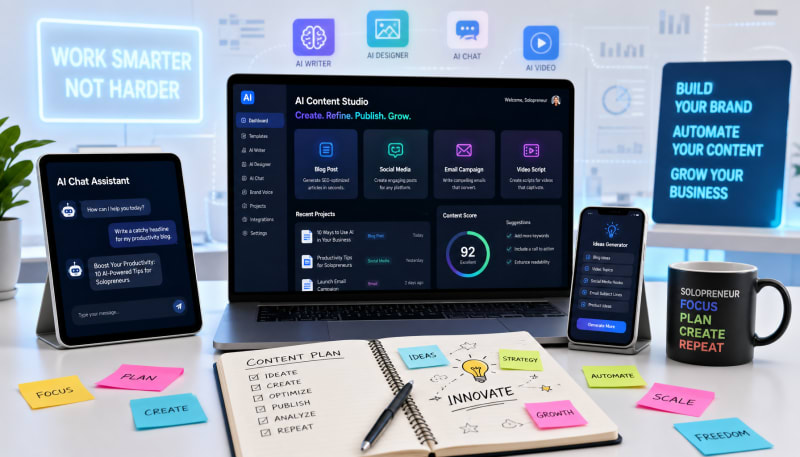
Transforming core insights into a high-impact content multiplication engine.
Running a solo business means wearing every hat—strategist, creator, marketer, and accountant. Content creation often becomes the bottleneck that limits growth. You know you need consistent output across multiple channels, but there are only so many hours in a day. AI content systems offer solopreneurs a way to scale their content production without sacrificing quality or hiring a full team.
The key isn't just using AI tools randomly—it's building a system that turns your expertise into reliable, high-quality content that serves your business goals. Here's how to construct an AI-powered content engine that actually works.
Related: If you need a better system for planning, organizing, and developing content ideas, Content Ideation Hub gives you a repeatable structure.
Why Solopreneurs Need Content Systems, Not Just Tools
Most solopreneurs start by experimenting with AI tools content creation in isolation. You might use ChatGPT for a blog post one day, then try another tool for social media the next. This scattered approach creates more work, not less.
A content system is different. It's a repeatable process that takes your core ideas and transforms them into multiple content formats efficiently. The system includes your tools, your workflows, your quality controls, and your distribution methods—all working together.
Without a system, you're constantly starting from scratch. With one, you build momentum and compound your efforts over time.
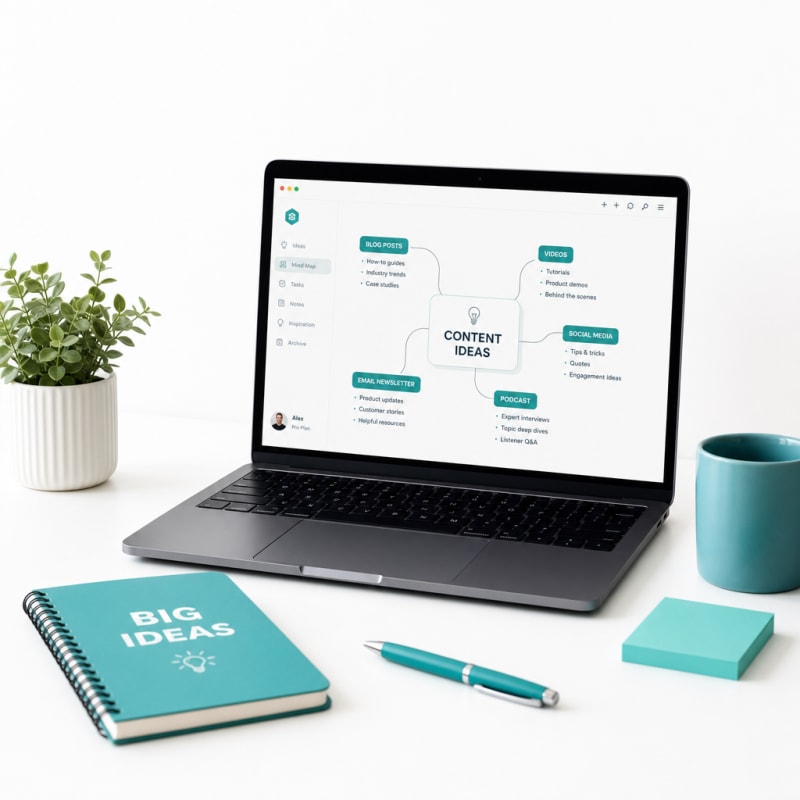
Building Your AI Content Stack
Your content stack should handle four key functions: ideation, creation, refinement, and distribution. Different tools excel at different stages.
Ideation and Research
Start with tools that help you identify what your audience actually wants. AI-powered research platforms can analyze search trends, competitor content, and audience questions to surface topics worth covering. Tools like Perplexity or Claude can synthesize research from multiple sources quickly, giving you the foundation for authoritative content.
The best ai tools 2026 for this stage combine real-time data with powerful language understanding. They don't just suggest generic topics—they help you find angles that align with your unique positioning.
Content Generation
This is where most people focus, and for good reason. AI writing assistants can dramatically accelerate first-draft creation. But the goal isn't to let AI write everything—it's to use AI to get past the blank page and maintain consistency.
For solopreneurs, the most effective approach is the "expand and refine" method. You provide the core insights, structure, and voice direction. The AI expands your outline into full sections. You then edit for accuracy, personality, and brand alignment.
Choose tools that let you train them on your writing style and previous content. The more context you provide, the less editing you'll need to do.
Multimedia Creation
Written content is just the starting point. AI tools now handle image generation, video editing, audio production, and graphic design. A single piece of written content can become a YouTube script, podcast episode outline, social media carousel, and email newsletter.
Tools like Descript handle audio and video editing through text commands. Image generators create custom visuals without stock photo subscriptions. These capabilities let solopreneurs compete with much larger content teams.
The Content Multiplication Framework
Here's a practical system that turns one core idea into a week's worth of content:
Step 1: Create Your Pillar Content
Start with your most substantial format—typically a long-form blog post, video, or podcast episode. This is where you invest the most time and inject your expertise. Use AI to accelerate research and drafting, but ensure your unique insights and voice come through clearly.
Step 2: Extract Key Components
Use AI to identify the quotable insights, key statistics, and main arguments from your pillar content. These become raw material for derivative content.
Step 3: Reformat for Each Channel
AI excels at reformatting. Your pillar post can become: five LinkedIn posts highlighting different angles, a thread for X, several
The Practical Solution
Start by choosing one primary content format. Build a simple workflow around it: create one substantial piece weekly, then use AI to systematically break it into channel-specific formats. Train your AI tools on past content so they learn your patterns. Set up templates for each derivative format with clear prompts that maintain consistency. Schedule one afternoon monthly to refine your prompts based on what's working. The system works when you stop treating AI as a shortcut and start treating it as infrastructure that multiplies what you've already created.
— Kevin Marsh, Editor-in-Chief
Synthetic Proof
Verified — Editorial Layer
This content has passed editorial verification for clarity, accuracy, and trust alignment.
Editor-in-Chief: Kevin Marsh
Verification Status: PASSED
Verification Status: PASSED
Comments
Post a Comment