Workflow optimization piece for digital asset management (DAM) administrators and media archivists. Digital assets rarely stay still. They're edited, reformatted, republished, reassembled into new compositions, distributed across platforms, and eventually archived. At each stage, something changes—sometimes intentionally, sometimes not. The question isn't whether assets evolve. It's whether organizations can prove how they evolved. Most digital asset management systems track where files live and who touched them last. Far fewer can demonstrate an unbroken chain of custody from creation through archive. That gap is becoming a problem—not just for media companies worried about authenticity, but for regulated industries, enterprises managing AI training data, and anyone who might need to defend the integrity of their digital records in court or audit. Provenance is becoming one part of a larger operational trust question: can an organization verify its...
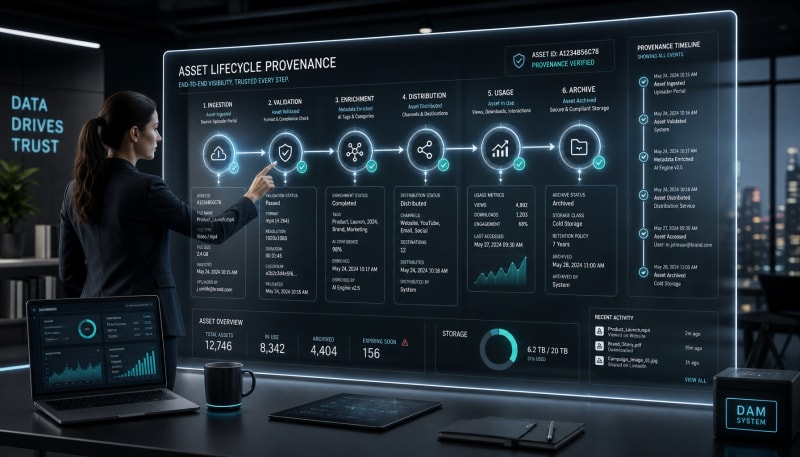
Workflow optimization piece for digital asset management (DAM) administrators and media archivists.
Digital assets rarely stay still. They're edited, reformatted, republished, reassembled into new compositions, distributed across platforms, and eventually archived. At each stage, something changes—sometimes intentionally, sometimes not. The question isn't whether assets evolve. It's whether organizations can prove how they evolved.
Most digital asset management systems track where files live and who touched them last. Far fewer can demonstrate an unbroken chain of custody from creation through archive. That gap is becoming a problem—not just for media companies worried about authenticity, but for regulated industries, enterprises managing AI training data, and anyone who might need to defend the integrity of their digital records in court or audit.
Provenance is becoming one part of a larger operational trust question: can an organization verify its content, prompts, and AI workflows consistently? Synthetic Proof helps teams evaluate where those trust signals hold—and where gaps remain.
Lifecycle provenance addresses this gap. It's the practice of maintaining verifiable, tamper-evident records of asset history across every stage of the content lifecycle. Not as a forensic afterthought, but as operational infrastructure.
Provenance Breaks Down When Workflows Span Systems
The typical enterprise asset doesn't live in one place. A video might be ingested through a media asset management system, edited in a non-linear editing platform, color-corrected in specialized software, transcoded for distribution, published to multiple platforms, and eventually moved to cold storage. At each transition, metadata gets lost, rewritten, or simply never captured in the first place.
Traditional DAM systems excel at cataloging and retrieval. They know what assets exist and where to find them. But they weren't designed to maintain cryptographically verifiable records across workflow boundaries. When an asset moves between systems—or when multiple teams touch the same file using different tools—the chain of custody fragments.
This fragmentation has consequences. When a news organization needs to verify that published footage hasn't been manipulated, scattered logs across disconnected systems don't provide sufficient evidence. When a pharmaceutical company must prove that training data for a diagnostic AI model wasn't contaminated, incomplete audit trails create compliance risk. When a legal team needs to establish the provenance of digital evidence, gaps in the record undermine credibility.
Lifecycle Provenance Requires Infrastructure, Not Just Logging
Adding more logging doesn't solve the problem. Most organizations already generate vast amounts of log data. What's missing isn't volume—it's verifiability, continuity, and standardization across the asset lifecycle.
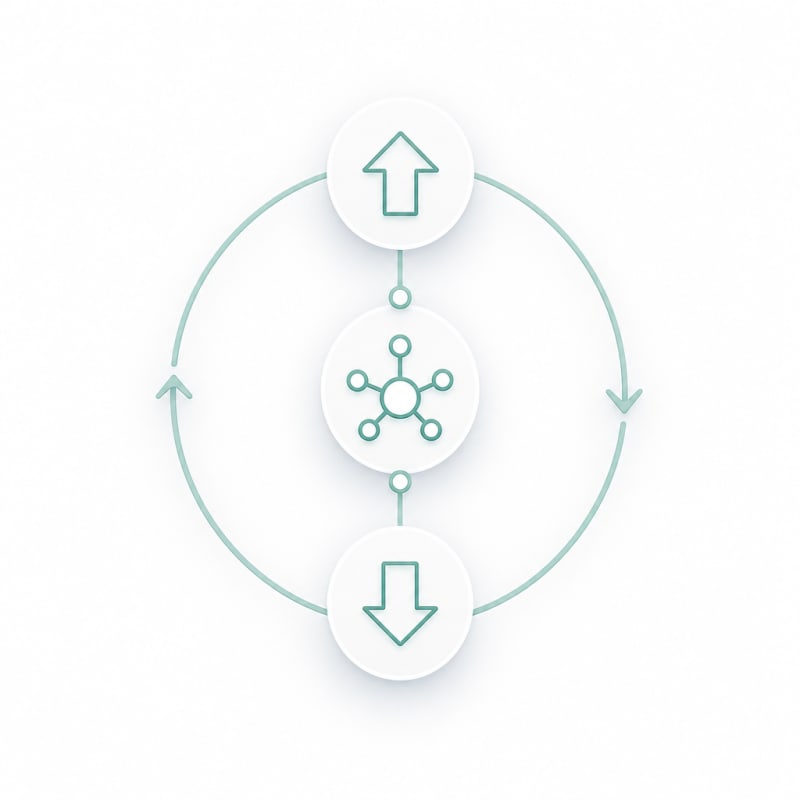
Lifecycle provenance infrastructure operates differently than conventional audit logs. It treats provenance records as first-class data objects that travel with assets, not metadata buried in system logs. Each significant event—ingestion, editing, format conversion, distribution, archival—generates a cryptographically signed record that links to previous records in the chain.
This approach creates several advantages. Provenance records can be validated independently without requiring access to the originating systems. Chains of custody remain intact even when assets move between platforms or organizations. And because records are tamper-evident, they can serve as credible evidence in regulatory, legal, or reputational disputes.
The technical foundation typically involves content-addressable storage, cryptographic hashing, and distributed ledger concepts—though not necessarily blockchain in the cryptocurrency sense. The goal is ensuring that provenance records are durable, verifiable, and resistant to both accidental corruption and intentional manipulation.
Ingestion Sets the Foundation
Lifecycle provenance begins the moment an asset enters organizational control. Ingestion is when initial metadata gets captured: creation timestamp, source attribution, technical specifications, copyright status, and any available information about how the content was produced.
For content created internally, ingestion might capture camera metadata, software version information, or records of which AI models were involved in generation. For licensed content, it might include contract terms, usage restrictions, and vendor attestations. For user-generated content, it might document submission channels and consent records.
What matters is creating a verifiable anchor point—a cryptographic fingerprint of the asset in its initial state along with contextual metadata about its origin. This becomes the root of the provenance chain that all subsequent records reference.
Transformation Events Extend the Chain
Every meaningful change to an asset should generate a provenance record. Edits, crops, color corrections, format conversions, audio mixing, composite assembly—each transformation gets documented with information about what changed, who authorized it, which tools were used, and when it occurred.
The challenge is determining which events matter. Recording every autosave would create noise. But failing to document a significant edit that changes content meaning creates gaps. Organizations developing lifecycle provenance capabilities typically define transformation policies that specify which workflow events trigger provenance recording.
Advanced implementations can also capture derivative relationships. When an asset gets repurposed—a section of video extracted for social media, an image cropped for thumbnail use, audio translated into another language—the derivative inherits provenance from the source while establishing its own chain for subsequent modifications.
Distribution Marks Custody Transfer
Publication and distribution represent critical provenance moments. Once an asset leaves direct organizational control, the ability to track its subsequent use diminishes. Recording exactly what version was distributed, to which channels, under what terms, and at what timestamp creates a verifiable record of what the organization released.
For regulated industries, distribution records can demonstrate compliance with content approval workflows. For media organizations, they establish which version of a story was published when. For enterprises managing AI-generated content, they document what synthetic media was released and under what disclosure terms.
Distribution provenance becomes especially important when content gets updated or corrected. Maintaining records of all published versions—along with timestamps and change rationale—allows organizations to demonstrate transparency rather than obscure revision history.
Archival Doesn't End Provenance Requirements
Digital archives aren't static vaults. Content gets migrated to new storage systems, reformatted for compatibility with evolving playback technologies, and occasionally retrieved for reuse. Each event represents a potential point where provenance chains can break.
Lifecycle provenance extends into archival by ensuring that storage migrations, format conversions, and retrieval events all generate verifiable records. When an archived video gets transcoded from an obsolete format to a current standard, the provenance chain documents the conversion process, preserving evidence that the content itself wasn't altered even though the technical wrapper changed.
This matters because archives increasingly serve as training data sources for AI models, evidence repositories for legal proceedings, and historical records with long-term cultural value. Being able to demonstrate that archived content has maintained integrity across decades—despite multiple technology transitions—requires provenance infrastructure that treats archival as an active lifecycle stage rather than a terminal state.
Governance and Compliance Are Driving Adoption
Lifecycle provenance is moving from a theoretical best practice to an operational requirement, driven largely by regulatory pressure and reputational risk.
The EU AI Act requires documentation of training data provenance for high-risk AI systems. Proposed synthetic media disclosure laws in multiple jurisdictions require content creators to maintain records of AI involvement in production. Media organizations facing sophisticated deepfakes need proof that their published content is authentic. Pharmaceutical and financial services companies must demonstrate that their digital records haven't been tampered with.
These pressures are converging into a broader recognition that digital asset integrity is a governance issue, not just a technical one. Organizations that can demonstrate comprehensive provenance gain credibility advantages. Those that can't face increasing scrutiny.
The shift is particularly visible in industries where content authenticity directly impacts public trust. News organizations are implementing provenance systems to combat misinformation accusations. Entertainment companies are using them to protect intellectual property and combat piracy. Government agencies are deploying them to ensure the integrity of public records.
Integration Remains the Primary Implementation Challenge
The hardest part of implementing lifecycle provenance isn't the cryptography or the data structures. It's integration across heterogeneous workflows that span multiple systems, departments, and sometimes organizations.
A typical enterprise content workflow might touch a dozen different platforms—asset management systems, editing tools, review and approval software, content delivery networks, and archival systems. Each has its own metadata standards, APIs, and logging mechanisms. Creating continuous provenance chains across these systems requires either deep integration work or the introduction of provenance infrastructure that can intercept workflow events regardless of which specific tools are being used.
Some organizations are approaching this through standards adoption—implementing C2PA for media assets, for example, which provides a framework for embedding provenance metadata directly in content files. Others are building provenance layers that sit above existing systems, capturing workflow events and maintaining parallel provenance records without requiring modification of legacy platforms.
Both approaches have merit. Standards-based provenance travels with assets more easily. Infrastructure-based provenance can encompass workflow events beyond what individual file formats can capture. Mature implementations often combine both.
Final Thoughts
Digital assets have lifecycles, not lifespans. They evolve, transform, migrate, and eventually either archive or become forgotten. For most of digital media history, tracking these changes has been optional—a nice-to-have for well-organized teams but not a fundamental requirement.
That's changing. As AI makes content manipulation trivially easy, as regulations demand proof of data integrity, and as digital records become evidence in high-stakes decisions, the ability to demonstrate unbroken chains of custody is becoming infrastructure.
Lifecycle provenance isn't about preventing change—content should evolve as organizational needs require. It's about making that evolution transparent, verifiable, and defensible. Organizations building this capability now are preparing for a world where "we have the file" is no longer sufficient. The question will be: can you prove its history?
SYNTHETIC PROOF
FROM PROVENANCE TO OPERATIONAL TRUST
Understand Your AI Trust Gap
Synthetic Proof helps teams evaluate verification, provenance, prompt risk, and digital media trust through independent audits and structured findings.
Explore Synthetic ProofSynthetic Proof
Verified — Editorial Layer
This content has passed editorial verification for clarity, accuracy, and trust alignment.
Editor-in-Chief: Kevin Marsh
Verification Status: PASSED
Verification Status: PASSED
Comments
Post a Comment