Learn why organizations are investing in verification instead of detection alone. For years, the fight against synthetic media manipulation followed a familiar pattern: researchers identified deepfake artifacts, built detection models around those signatures, and deployed them across platforms. Detection accuracy improved. Conferences celebrated breakthroughs. The industry felt like it was winning. Then generative AI became exponentially better at eliminating the very artifacts those systems were trained to find. As synthetic media improves, confidence increasingly comes from layered evidence rather than a binary label. Synthetic Proof helps organizations evaluate that evidence in context. What's emerging isn't simply a technical gap that better detection can close. It's a fundamental shift in how organizations must approach digital trust. The old model—detect manipulated content after it's created—assumes defenders can keep pace with attackers....
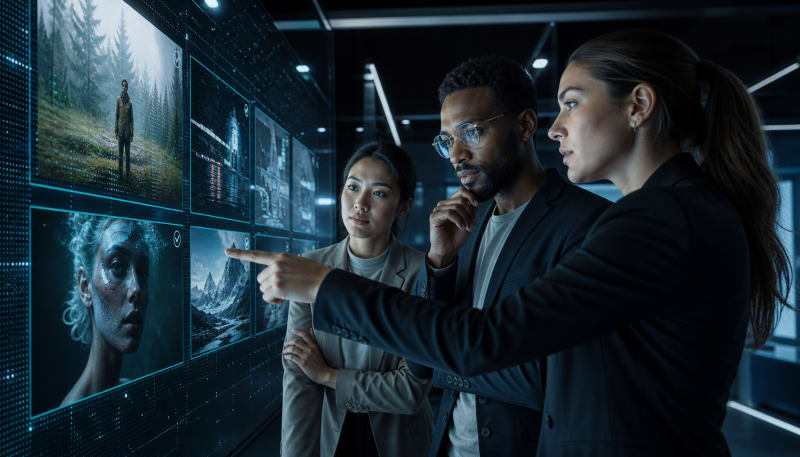
Learn practical techniques and tools for identifying AI-generated images before they spread online.
AI-generated images are flooding social media, news feeds, and messaging apps at an unprecedented rate. What once required professional photography or graphic design skills can now be created in seconds with a simple text prompt. While this democratization of image creation has benefits, it also presents serious challenges for truth and trust online.
The problem isn't just hypothetical. AI-generated images of fake events, fabricated celebrity moments, and synthetic news have already spread across platforms, racking up millions of views before being debunked. By the time fact-checkers catch up, the damage is often done. Learning to identify synthetic media before it gains traction is becoming an essential digital literacy skill.
Related: If your workflow touches verification, provenance, or suspicious media, Synthetic Proof can help audit content and reduce trust risk.
Why AI Image Detection Matters Now
The quality gap between AI-generated and authentic images has narrowed dramatically. Modern image generators produce photorealistic results that fool even trained observers at first glance. This creates a verification problem that extends beyond individual users to journalists, researchers, and anyone responsible for sharing information.
Synthetic media spreads faster than corrections. Once an AI image goes viral, it enters the permanent internet record, resurfacing repeatedly regardless of later debunking efforts. Early detection prevents this cycle before it starts.
Visual Artifacts That Reveal AI Generation
Despite impressive advances, AI image generators still leave telltale signs. Training your eye to spot these artifacts provides your first line of defense against synthetic media.
Hand and Finger Anomalies
Human hands remain challenging for AI systems. Look closely at fingers in any suspicious image. Common issues include extra or missing fingers, unnatural joint positions, fingers that merge together, or thumbs on the wrong side of hands. While newer models have improved, hands still frequently give away AI generation.
Text and Typography Errors
AI generators struggle with readable text. Signs, storefronts, book covers, and any visible writing in AI images often contain gibberish, warped letters, or text that looks plausible from a distance but becomes nonsensical up close. Legitimate photographs capture text accurately, while AI systems generate text-shaped patterns.

Background Inconsistencies
Examine backgrounds carefully for objects that don't quite make sense. AI images often include architectural elements that violate physics, reflections that don't match their sources, or objects that blend into each other unnaturally. The background receives less attention from viewers, making it easier to miss these flaws initially.
Lighting and Shadow Problems
Lighting in photographs follows predictable physics. Shadows should align with light sources, and illumination should be consistent across the scene. AI images frequently show conflicting shadows, faces lit from impossible angles, or lighting that changes inexplicably within a single frame.
Technical Detection Methods
Beyond visual inspection, technical tools and metadata analysis provide stronger synthetic proof when evaluating questionable images.
Metadata Examination
Authentic photographs contain EXIF data showing camera settings, device information, timestamps, and sometimes GPS coordinates. AI-generated images typically lack this metadata or contain suspiciously minimal information. Free tools like ExifTool or online EXIF viewers let you inspect image metadata in seconds.
Keep in mind that metadata can be stripped or fabricated, so absence of EXIF data doesn't guarantee AI generation. However, proper metadata supports authenticity when combined with other verification methods.
Reverse Image Search
Running a reverse image search through Google Images, TinEye, or Bing Visual Search helps establish an image's history. If an image first appeared recently despite depicting an older event, or if you find no earlier instances of what claims to be historical footage, that's a red flag.
Reverse searches also reveal whether an image has been modified. Finding the original version of a manipulated image provides definitive proof of tampering.
AI Detection Tools
Specialized detection tools analyze images for patterns characteristic of AI generation. Services like Hive Moderation, Illuminarty, and Optic analyze pixel-level patterns, noise distributions, and generation artifacts invisible to human observers.
These tools aren't foolproof and can produce false positives or negatives. Use them as one data point among several rather than absolute arbiters of authenticity.
Contextual Verification Techniques
Technical analysis works best when paired with contextual verification. The story around an image often reveals more than the pixels themselves.
Source Evaluation
Where did the image first appear? Images from established news organizations, verified photographers, or official sources carry more credibility than anonymous social media posts. Trace images back to their earliest source when possible.
Be skeptical of images shared without attribution or context. Viral images frequently circulate stripped of their original source, making verification difficult by design.
Consistency Checking
Does the image align with other verified information about the same event or subject? If a supposedly breaking news image contradicts confirmed details about weather, location, or timing, that discrepancy demands explanation.
Compare multiple images of the same event from different sources. Genuine events generate numerous photographs from varied angles, while AI-generated hoaxes typically exist in isolation.
Timing Analysis
Consider whether the image could reasonably exist. A high-quality image of a breaking event posted minutes after it occurred raises questions. Professional photography requires time for capture, selection, editing, and distribution.
Building Verification Habits
Detection skills require practice. Start by examining images you know are AI-generated alongside authentic photographs. This training sharpens your ability to spot subtle differences that become obvious with experience.
Before sharing striking or unusual images, pause for basic verification. This brief hesitation prevents you from amplifying synthetic media while demonstrating responsible information sharing.
Stay current with AI capabilities. As image generators improve, detection techniques must evolve. Following AI development news helps you understand what's possible with current technology and what red flags to watch for.
Conclusion
Detecting AI images before they go viral requires combining visual analysis, technical tools, and contextual verification. No single method provides perfect certainty, but a multi-layered approach catches most synthetic media before sharing.
The goal isn't developing paranoia about every image you encounter. Most photographs remain authentic. The goal is building healthy skepticism paired with practical verification skills. When an image seems too perfect, too timely, or too inflammatory, invest a few minutes in verification rather than immediate sharing.
As AI image generation becomes more sophisticated, detection will require ongoing learning and adaptation. The techniques outlined here provide a foundation for identifying synthetic media today while building habits that will serve you as technology evolves. Taking time to verify before sharing isn't just about protecting your own credibility—it's about maintaining trust in our shared information ecosystem.
The Practical Solution
Begin with the quickest checks: zoom in on hands, read any visible text, and trace shadows to their light sources. Run every questionable image through a reverse image search tool and check the metadata. Train yourself to pause before sharing anything that triggers strong emotion, since viral AI images exploit reaction over reflection.
— Kevin Marsh, Editor-in-Chief
SYNTHETIC PROOF
Verify What You See
Synthetic media is getting harder to identify. Get verification-focused analysis for suspicious content.
Run a Synthetic Proof AuditSynthetic Proof
Verified — Editorial Layer
This content has passed editorial verification for clarity, accuracy, and trust alignment.
Editor-in-Chief: Kevin Marsh
Verification Status: PASSED
Verification Status: PASSED
Comments
Post a Comment