Learn why organizations are investing in verification instead of detection alone. For years, the fight against synthetic media manipulation followed a familiar pattern: researchers identified deepfake artifacts, built detection models around those signatures, and deployed them across platforms. Detection accuracy improved. Conferences celebrated breakthroughs. The industry felt like it was winning. Then generative AI became exponentially better at eliminating the very artifacts those systems were trained to find. As synthetic media improves, confidence increasingly comes from layered evidence rather than a binary label. Synthetic Proof helps organizations evaluate that evidence in context. What's emerging isn't simply a technical gap that better detection can close. It's a fundamental shift in how organizations must approach digital trust. The old model—detect manipulated content after it's created—assumes defenders can keep pace with attackers....
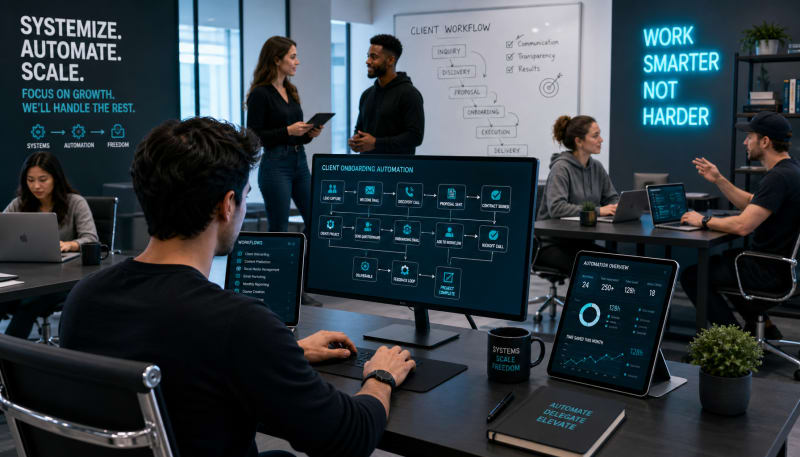
Build repeatable systems for onboarding, communication, delivery, and invoicing so your freelance business runs more efficiently and scales without adding unnecessary complexity.
Most freelancers start their journey focused on delivering great work. But as client lists grow, the lack of systems becomes a bottleneck. Missed emails, inconsistent deliverables, and repeated manual tasks drain time that could be spent on billable work or business development. The difference between a struggling freelancer and a thriving one often comes down to operational systems.
Systemizing operations isn't about losing the personal touch that makes freelancing appealing. It's about creating repeatable processes that ensure consistent quality while freeing up mental bandwidth. Whether you're a designer, writer, developer, or consultant, implementing freelance systems transforms how you work and scale.
Related: If your work depends on client delivery, handoffs, and repeatable execution, The Freelancer & Contractor Hub helps structure the process.
Why Freelancers Need Operational Systems
Without systems, every project feels like starting from scratch. You're constantly reinventing the wheel, answering the same questions, and scrambling to remember what worked last time. This reactive approach leads to burnout and limits how much you can earn.
Contractor systems create predictability for both you and your clients. When onboarding follows a set pattern, clients feel more confident. When project delivery follows documented steps, quality stays consistent. And when administrative tasks run on autopilot, you reclaim hours each week.
The scalability problem is real. Without systems, taking on more clients means working more hours. With systems, you can handle increased volume without proportionally increasing your time investment.
Mapping Your Client Journey
Before automating anything, map out your actual client journey from first contact to project completion. Most freelancers discover they have an implicit process that exists only in their heads. Making it explicit is the first step toward systemization.
Initial Contact to Onboarding
Document every step: inquiry response, discovery call, proposal delivery, contract signing, invoice payment, and kickoff. Each of these touchpoints can be templated and partially automated. Create email templates for common scenarios, standardize your discovery call questions, and develop a proposal framework you can customize quickly.

Your onboarding process should collect all necessary information upfront. Build an intake form that captures project requirements, brand assets, access credentials, and communication preferences. This eliminates the back-and-forth that typically eats up the first few days of a project.
Project Execution
Break down how you actually deliver work. What are the phases? What does the client see at each stage? When do you need feedback? Documenting your delivery process reveals opportunities for client workflow automation and ensures nothing falls through the cracks.
Create checklists for each project type. If you write blog posts, your checklist might include keyword research, outline approval, first draft, revisions, final delivery, and SEO optimization. If you design websites, it might cover wireframes, mockups, development, testing, and launch. These checklists become your quality control mechanism.
Automating Client Communication
Communication overhead is one of the biggest time sinks for freelancers. Clients want updates, you need feedback, and status questions pile up. Strategic automation reduces this burden without making interactions feel robotic.
Status Updates and Progress Reports
Set expectations early about when and how you'll communicate progress. Many freelancers implement weekly status updates sent on a specific day. Template the format so you're just filling in project-specific details rather than composing from scratch each time.
For milestone-based projects, automated emails can notify clients when you've completed each phase and what comes next. This proactive communication reduces "checking in" emails and demonstrates professionalism.
Feedback Requests and Approval Workflows
Waiting for client feedback creates bottlenecks. Implement a system where feedback requests include clear deadlines and specific questions. Use collaboration tools that centralize comments rather than scattering them across email threads.
Some freelancers build implied approval into their contracts—if feedback isn't received within a specified timeframe, the deliverable is considered approved. This keeps projects moving and trains clients to respond promptly.
Building Contractor Systems for Delivery
Your delivery systems determine how consistently you can produce quality work. The goal is to create a production environment that doesn't rely entirely on memory or motivation.
Project Templates and Starting Points
Develop templates for every recurring deliverable. Writers need document templates with standard formatting. Designers need design system libraries. Developers need boilerplate code repositories. These starting points eliminate setup time and ensure brand consistency across projects.
Your project management setup should also be templateable. When a new project starts, you should be able to duplicate a template board or workspace that already contains all standard tasks, phases, and workflows.
Quality Assurance Processes
Create a pre-delivery checklist that you run through before sending anything to a client. This might include proofreading, testing, file organization, backup creation, and documentation. Having this checklist prevents embarrassing mistakes and reduces revision requests.
Consider building a review buffer into your timeline. Instead of delivering immediately upon completion, schedule a next-day review when you'll catch errors you missed in the heat of production.
Systemizing Administrative Tasks
Administrative work doesn't generate revenue but consumes significant time. These tasks are prime candidates for systemization and automation.
Invoicing and Payment Collection
Automate invoice generation and sending. Many freelancers use software that automatically creates and emails invoices based on project milestones or monthly schedules. Payment reminders can also be automated, reducing the awkwardness of chasing unpaid invoices.
Consider recurring billing for retainer clients. Automatic monthly charges eliminate invoicing entirely for these relationships and improve cash flow predictability.
Time Tracking and Expense Management
If you bill hourly or need to track profitability, implement passive time tracking. Tools that automatically monitor which applications and projects you're working on require less manual input than traditional time tracking.
For expense tracking, use tools that can photograph receipts and automatically categorize transactions. At tax time, having organized expense data saves hours and potentially thousands in accountant fees.
Documentation and Knowledge Management
Your systems are only sustainable if they're documented. When you document processes, you create assets that let you delegate, train virtual assistants, or simply remind yourself of best practices you've forgotten.
Creating Standard Operating Procedures
Start with your most frequent activities. Write step-by-step instructions for tasks you do weekly. Include screenshots, links to templates, and decision criteria. These SOPs become your external brain, capturing hard-won knowledge that would otherwise be lost.
Keep documentation in a searchable, centralized location. A simple wiki or organized folder structure works better than scattered documents. Update procedures when you discover improvements.
Client-Specific Information
Maintain a knowledge base for each client containing brand guidelines, preferences, access information, and project history. When returning to a client after weeks or months, this documentation eliminates ramp-up time.
Tools and Technology for Freelance Systems
The right tools make systemization practical, but avoid tool overload. Start with basics and add complexity only when needed.
Project management platforms help track deliverables and deadlines. Choose one with template functionality so you can replicate workflows. Communication tools should centralize client conversations—pick one primary channel rather than juggling email, text, and multiple messaging apps.
Client workflow automation platforms can connect your various tools, triggering actions based on events. When a contract is signed, automatically create a project workspace, send a welcome email, and generate the first invoice. These automations eliminate manual coordination.
File storage and organization systems prevent the chaos of scattered documents. Develop a consistent folder structure and naming convention that you use for every project. Future you will be grateful when finding old files takes seconds instead of minutes.
Scaling Without Sacrificing Quality
The ultimate goal of systemization is sustainable growth. With proper systems, you can increase income without proportionally increasing hours or stress.
Systems reveal your actual capacity. When you know how long each project phase takes and have processes running smoothly, you can accurately assess whether you can take on new work. This prevents overcommitment and protects your reputation.
Documented systems also create delegation opportunities. When processes exist only in your head, you're the bottleneck. When they're documented and supported by tools, you can bring in subcontractors or assistants to handle specific components while maintaining quality standards.
Conclusion
Systemizing operations transforms freelancing from a constant juggling act into a sustainable business. By mapping client journeys, automating communications, building delivery systems, and documenting processes, freelancers create the foundation for consistent quality and manageable growth. The initial time investment in creating freelance systems pays dividends in every subsequent project through reduced administrative burden, fewer errors, and improved client satisfaction. Start with one area—perhaps onboarding or delivery—and systematize it completely before moving to the next. Incremental improvements compound over time, eventually creating an operational infrastructure that supports the freelance business you want to build rather than one that keeps you perpetually reactive.
The Practical Solution
Start by documenting one client journey this week—from inquiry to delivery—exactly as it happens now. Turn the three most repeated actions into templates or checklists you can reuse immediately. Focus on onboarding and communication first since they consume the most time with the least variation. Systems aren't about perfection; they're about stopping yourself from rebuilding the same process every single time.
— Kevin Marsh, Editor-in-Chief
SNAPSE
Run Client Work More Smoothly
Use structured systems for delivery, handoff, and repeatable execution.
Explore Freelancer & Contractor HubSynthetic Proof
Verified — Editorial Layer
This content has passed editorial verification for clarity, accuracy, and trust alignment.
Editor-in-Chief: Kevin Marsh
Verification Status: PASSED
Verification Status: PASSED
Comments
Post a Comment